Cebu City Grapples with Prolonged Waste Management Crisis After Deadly Landslide
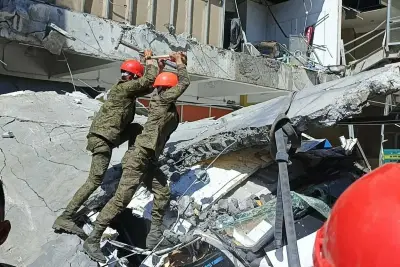
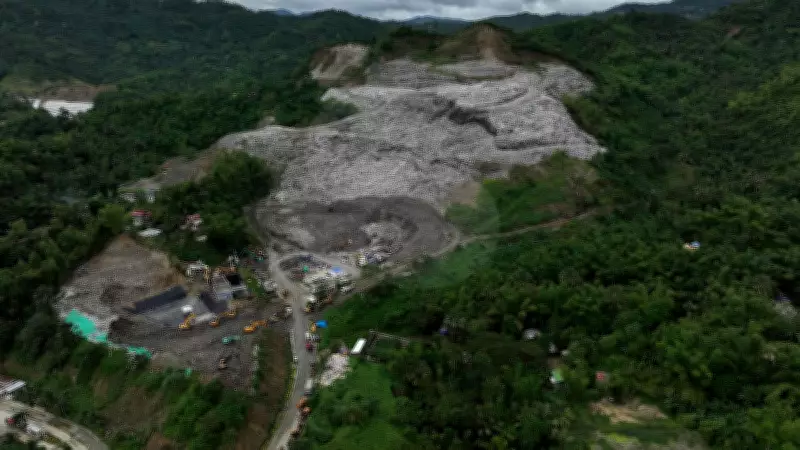
The struggle to manage urban waste often remains invisible until a catastrophic system failure transforms a logistical challenge into a full-blown public emergency. When critical infrastructure collapses, cities are thrust into high-stakes scrambles that drain public funds, strain neighboring municipalities, and expose the fragile underpinnings of daily utilities. In Cebu City, this scenario has become a harsh reality following a devastating trash slide on January 8, 2026, at the Binaliw landfill.
Extended Rehabilitation Timeline and Soaring Costs
Prime Waste Solutions (PWS) Cebu has informed the Cebu City Council that rehabilitating the Binaliw landfill will require between six months and one year. During an executive session on February 23, 2026, Niño Abellana Jr., general manager of PWS Cebu, detailed the company's formal request to the Department of Environment and Natural Resources (DENR) for amendments to its environmental compliance certificate and clearance for the landfill's rehabilitation and expansion.
The rehabilitation plan includes emergency stabilization and remediation measures, such as slope stability analysis, leachate containment, site grading, waste reduction in staging areas, soil covering, capping of inactive sections, and environmental recovery efforts like groundwater monitoring and odor control.

In the interim, Cebu City is forced to haul its garbage 61 kilometers away to Aloguinsan, a move that has significantly driven up disposal costs. The local government is urgently searching for closer alternatives and temporary holding solutions to mitigate the financial strain.
Fragile Urban Infrastructure and Logistical Hurdles
The situation in Cebu City underscores the fragile nature of waste networks in rapidly growing metropolitan areas. When a primary disposal site fails—especially one that was receiving up to 1,000 metric tons of garbage daily—the ripple effects quickly overwhelm the entire region's capacity. For instance, the Asian Energy landfill in neighboring Consolacion was considered as an alternative, but it was already saturated with waste from Liloan, Mandaue, and Lapu-Lapu. This highlights a common global urban trend: local infrastructure often operates at maximum capacity, leaving cities with few viable backup options in the event of a failure.
For taxpayers and the local government, the stakes are primarily financial and operational. Hauling waste to Aloguinsan costs P3,906 per ton, effectively doubling the city's standard garbage disposal expenses. Under the emergency waste disposal contract with Cebu City for dumping at the Asian Energy Systems Corp. landfill, the tipping fee is P1,200 per ton.
To manage the overflow, the city is utilizing a vacant lot at the South Road Properties (SRP) Pond A as a temporary transfer station, a measure that requires meticulous oversight to prevent localized sanitation issues. Every day without a local landfill drains municipal funds that could otherwise be allocated to essential public services. Reducing waste volume has become a financial imperative, with the city aiming to divert at least 100 tons of waste daily through enhanced segregation efforts.
Competing Priorities and Financial Strain
The response to this crisis reveals the tension between navigating immediate financial realities and meeting stringent regulatory requirements for reopening the landfill. Mayor Nestor Archival emphasized the temporary nature of current fixes and the heavy financial toll on the city's budget.
"For now, we have this agreement with Aloguinsan. I hope our constituents understand that the area in SRP is only a transfer station," Archival stated. He underscored the unsustainable burden on city finances, noting, "At present, our cost is times two. It is very high and not sustainable." Addressing the failure of the closer Asian Energy Systems Corp. alternative, he added, "Their landfill is already overwhelmed."

Without Binaliw, Cebu City has no local dumping ground. The doubled financial cost of relying on private haulers to transport garbage to distant sites like Aloguinsan is unsustainable for the city's budget. Additionally, the city is racing against a mounting garbage backlog, with clearance efforts entirely dependent on maintaining these temporary, expensive transfer arrangements until a new, institutionalized system is stabilized.
Larger Implications and Future Strategies
This event underscores the critical need for disaster resilience and sustainable waste management in urban planning. The tragedy points to the dangers of overloaded infrastructure and the heightened risks from natural events such as earthquakes and heavy rainfall, including those brought by Typhoon Tino last November. The crisis is accelerating the push for long-term strategies, prompting the local government to explore strict waste segregation enforcement and alternative solutions like waste-to-energy projects.
Looking ahead, PWS Cebu is targeting April 14 to complete a comprehensive, science-based technical, geotechnical, and operational assessment to determine the root causes of the January 8 slide. "It is already underway and currently being completed," Abellana confirmed.
In the immediate term, the city is awaiting approval from the DENR and the City Government to open interim cells in Binaliw, which could accommodate up to two months' worth of waste and potentially begin operations as early as March. Simultaneously, the city is studying the possibility of utilizing a closer landfill facility in Toledo.
The massive financial drain of long-distance hauling places immense pressure on both PWS and the Cebu City Government to expedite safe alternatives. The city's ambitious goal to divert 100 tons of waste daily through strict segregation will serve as a crucial test of civic cooperation. Whether Binaliw secures approval to reopen its interim cells or the city shifts its hauling routes to Toledo, the coming weeks will determine if Cebu City can stabilize this critical utility before its temporary fixes become overwhelmed.