An environmental expert has issued a critical warning for Cebu, stating that the province must expand its flood management strategy beyond concrete channels and drains. The call for action emphasizes integrating nature-based solutions like watershed rehabilitation to combat increasingly severe flooding.
A Hybrid Approach to Flood Management
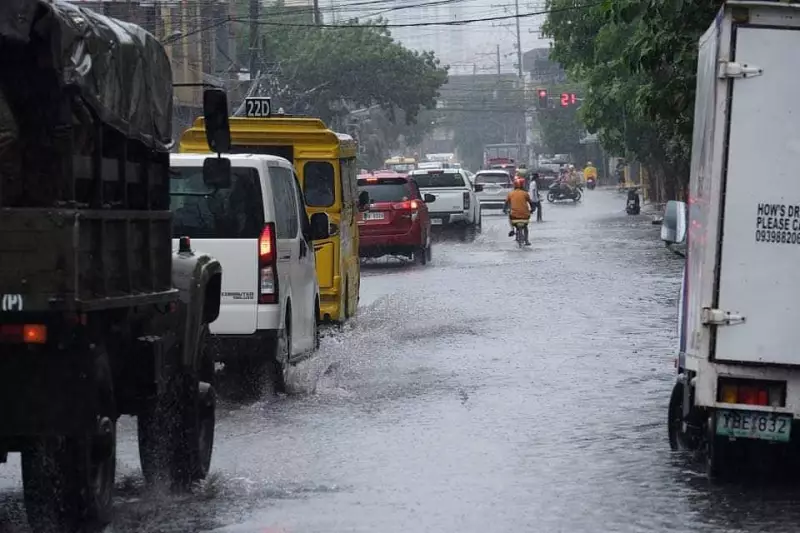
Hydrologist Danilo Jaque of Hydronet Consultants Inc. spoke at the Water Secure PH Forum on Thursday, November 27, 2025. He urged both national and local government units (LGUs) to abandon a purely structural approach. Recent floods affecting both upland and lowland barangays have proven that relying solely on engineering is insufficient.
Jaque explained that flood control has long been dominated by “purely structural” methods. However, the new reality of climate extremes and rapid urbanization demands a shift. “Both approaches are effective when integrated,” he stated. “We need structures, but we also need to preserve the ecology. Replacing everything with concrete is no longer sustainable.”

He highlighted nature-based interventions such as reforestation, establishing buffer zones, and constructing retention basins or lagoon systems. These solutions temporarily store excess stormwater, mimicking natural hydrology, which is crucial as rapid development creates heavier surface runoff.
The Data Behind the Deluge
The expert presented compelling data from the state weather bureau, covering 2000 to 2024, which shows significant fluctuations between extreme rainfall and drought. This volatility, combined with dense urban development concentrated within four kilometers of the coast, leaves major population centers highly vulnerable.
Cities like Cebu City (1.06 million people), Mandaue City (430,000), and Talisay City (270,000) are at particular risk, especially in low-lying areas less than 20 meters above sea level. Jaque stressed that LGUs must base all new drainage and flood control designs on updated rainfall data from PAGASA.
The structural interventions he outlined include:
- Impounding structures/reservoirs to hold back water during heavy rain.
- River and channel improvement to increase flow capacity.
- Improved drainage systems to manage urban runoff.
- Diking and pump gates to protect low-lying areas.
Watershed Depletion and the Path Forward
Jaque identified depleted watersheds as a root cause of Cebu’s worsening runoff—an issue flagged as early as a 2000 management study. The recommended solutions from that time, such as reforestation, agroforestry controls, and buffer zones, are now more urgent than ever. This also involves promoting responsible farming on upland slopes.
He revealed that recent flood events were analyzed to be “slightly more than a 100-year” rainfall episode, far exceeding what older drainage systems were designed to handle. While cities like Cebu, Mandaue, and Lapu-Lapu have drainage master plans, Jaque noted that many proposals remain largely unimplemented or unreviewed. “What’s necessary is reviewing and implementing them and updating these plans to reflect new rainfall data and changes in land use,” he asserted.
As a case study, he cited Mandaue’s Butuanon River flood control project. Its first phase, designed for smaller rainfall events, is nearly complete. However, without the crucial second phase and upstream watershed management, even well-built structures can be overwhelmed.
On the financial front, Jaque disclosed that structural projects for Cebu, Mandaue, Talisay, and Lapu-Lapu are estimated at a staggering P25 billion. This figure covers only engineered solutions, with nature-based measures requiring additional investment.
Regarding the Cebu Provincial Government’s proposal to construct dams in the Mananga, Butuanon, and Cotcot rivers, Jaque advised that they must serve a dual purpose: flood control and water supply. He emphasized that such projects “require proper feasibility studies, social impact assessments, and consideration of local fault lines to ensure safety.”

The Water Secure PH Forum, which ran until Friday, November 28, was organized by the Department of Science and Technology 7 in partnership with Hydronet and the Asian Institute of Technology Thailand. It gathered government agencies, researchers, LGUs, and international partners to craft actionable recommendations for Cebu’s water security and flood resilience.