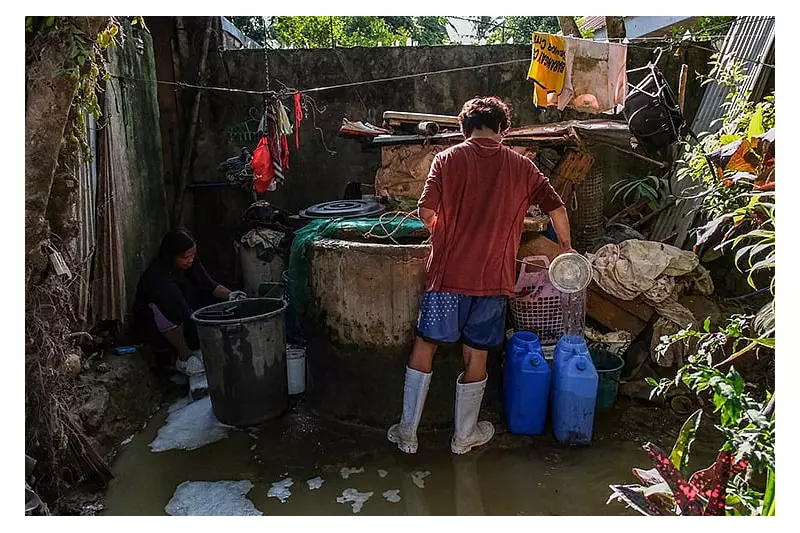
Residents of Purok Mangga Uno in Barangay Cotcot, Liloan have turned to deep well water for their daily needs as the area continues to suffer from water supply disruptions following Typhoon Tino's devastation on November 4, 2025.
Power Grid Failures Create Water Emergency
The Cebu Electricity Rights Advocates (Cera) has identified the root cause of the ongoing water crisis as unstable electrical infrastructure that repeatedly fails during weather emergencies. According to the group's recent press release, what should be minor power outages are escalating into major utility emergencies affecting thousands of households.
Nathaniel Chua, Cera convenor, emphasized the severity of the situation. "There is an alarming pattern between the speed of recovery in Cebu City and the hardship being endured in Cebu Province," Chua stated during the November 12 announcement.

Urban vs Provincial Recovery Disparity
Cera acknowledged the Visayan Electric Company (Veco) for its efficient restoration of power and water services in Metro Cebu, praising the company's coordinated field operations and transparent consumer communications. However, the advocacy group highlighted the stark contrast with areas served by Cebu Electric Cooperatives (Cebecos), where restoration efforts have been significantly slower.
The consequences of these delays are severe, with many provincial households experiencing dry taps, inadequate sanitation, and elevated public health risks for days following the typhoon. Chua stressed that while urban areas require adequate utilities, this shouldn't come at the expense of neighboring municipalities.
Critical Infrastructure Link Demands Urgent Attention
Cera explained the fundamental connection between power stability and water access. "When power lines feeding water pumping stations fail, entire districts lose access to clean water," the group detailed. This forces local water districts to rely on limited backup power that often proves insufficient for sustained operations.
Chua made a compelling comparison to emphasize the urgency: "Power lines supplying water pumping stations should be treated with the same priority as those serving hospitals because both are essential to life. Even in ancient times, clean water sources served as society's lifeline."
The organization has presented specific demands to address the crisis:
- Immediate reforms from electric utilities and regulatory agencies
- Fair resource deployment to hardest-hit provincial areas
- Prioritization of circuits supplying key water facilities
- Accelerated implementation of long-term resilience projects
- Clear and consistent communication from utilities regarding restoration timelines
As residents of Liloan continue to depend on alternative water sources, Cera's advocacy highlights the critical need for infrastructure improvements that can withstand future natural disasters and ensure equitable service restoration across all Cebu communities.