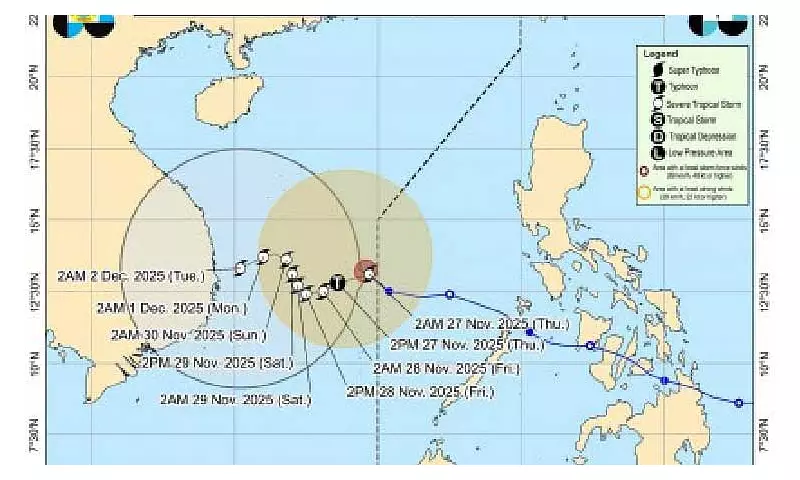
Tropical Cyclone Verbena, known internationally as Koto, has officially departed the Philippine Area of Responsibility according to the latest weather bulletin from PAGASA. The state weather bureau confirmed the cyclone's exit in their 5 a.m. advisory on Thursday, November 27, 2025.
Current Storm Intensity and Movement
The weather disturbance has shown significant strengthening, now packing maximum sustained winds of 110 kilometers per hour near its center. The cyclone also generates powerful gusts reaching up to 135 kilometers per hour, posing continued threats to maritime activities and coastal communities.
PAGASA's final tracking placed Verbena approximately 240 kilometers North Northeast of Pag-asa Island in Kalayaan, Palawan. The storm maintains a consistent west northwestward movement at 20 kilometers per hour as it continues its journey away from Philippine territory.

Active Weather Warnings and Affected Areas
Despite the cyclone's departure from PAR, Tropical Cyclone Wind Signal No. 1 remains hoisted over Kalayaan Islands, indicating that strong winds persist in this region. Residents and maritime vessels should exercise caution when traveling through these areas.
The combined effects of Tropical Cyclone Verbena and the northeast monsoon, locally known as amihan, continue to bring gusty conditions across multiple provinces. Strong to gale-force winds are expected to impact Batanes, Cagayan, Apayao, Abra, Ilocos Norte, Ilocos Sur, Zambales, Bataan, Occidental Mindoro, and Palawan.
PAGASA has maintained the gale warning over Northern Luzon's seaboards and Southern Luzon's western seaboard, advising fishermen and small sea craft to avoid venturing into these dangerous waters.
Heavy Rainfall Forecast and Regional Impact
Meanwhile, the shear line continues to influence weather patterns in Northern Luzon. PAGASA forecasts that Cagayan, Apayao, Kalinga, and Isabela will experience heavy rainfall throughout the day. Residents in these provinces should remain vigilant for possible flash floods and landslides, especially in low-lying and mountainous areas.
The weather bureau emphasizes that while Verbena has left the Philippine area, its interaction with the amihan season continues to create hazardous conditions across multiple regions. The public is advised to monitor subsequent weather bulletins for updates on developing weather situations.