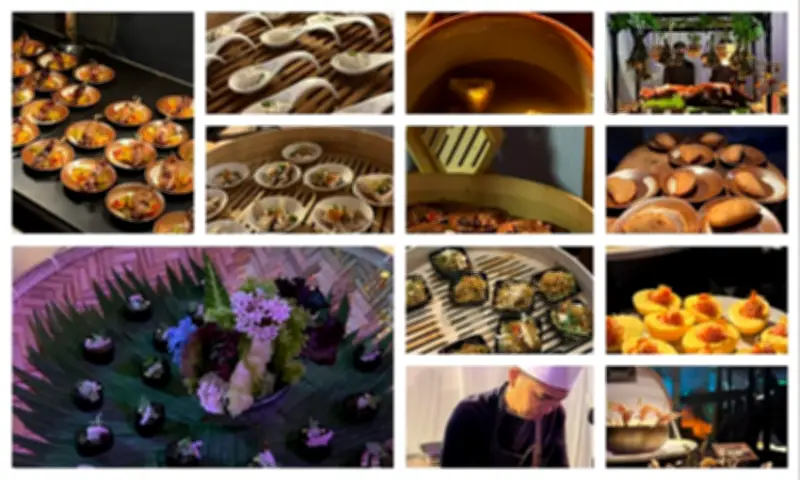
NUSTAR Resort Cebu hosted the Taste Cebu: Heirloom Culinary Gallery on July 9 and 10, 2026, presenting Cebuano cuisine as a guided walk through history rather than a buffet. Curated by food historian Louella “Loy” Eslao-Alix, inspired by her book “Hikay: The Culinary Heritage of Cebu,” the four-gallery food crawl traced the evolution of Cebuano cooking from its earliest roots to future possibilities. Each gallery was intentionally paced, with guests spending about 10 to 15 minutes tasting six carefully selected dishes before moving on.
Returning to Our Roots
After a short listening session, food guide PG Guba instructed guests to close their eyes and imagine Cebu before colonization. The question arose: What did early Cebuanos eat? The answer came in three cooking methods: sugba, tuwa, and kilaw. Dishes like kinilaw na langka, sinugbang nokus with fresh mango and tomato salsa, tinuwa nga manok, inun-unan made from lamon-lamon fish, and adobong pina-uga demonstrated practical early Cebuano cooking. Timke, a dish many had never encountered, existed largely because it was documented in “Hikay.” A sip of fresh buko juice cleansed the palate before the next chapter.
The Taste of Home
The second gallery felt instantly familiar, representing the cooking of mothers, grandmothers, and titas who never followed recipes yet always created beautiful meals. Dishes included pochero Cebuano, utan Bisaya, adobong manok Bisaya, paklay, ginamay, and mechado. Tasting them in this setting reminded guests why these dishes are so enduring, each spoonful evoking childhood kitchens and shared meals.

A Feast Worth Celebrating
By the third gallery, celebration took over. Tita Loy noted that while Chinese influence shaped everyday Cebuano dishes through lighter flavors and medicinal cooking, Spanish influence became most apparent during fiestas. Elaborate cooking wasn’t something families could afford daily. Morcon, embutido, empanada, lechon with hanging rice bundles, guso salad, balbacua, and bam-e filled the room. Tamaus, Cebu’s version of tamales, was another heirloom recipe that could have disappeared had it not been documented. Desserts included pintos, masi, langka turon, and shololot.
Looking Ahead
The final gallery posed the question: What does the future of Cebuano cuisine look like? Executive chef Martin Rebolledo and his team treated heritage as a foundation rather than a limitation. A kinilaw bar paired bright acidity with refreshing sorbet. The playful interpretation of pungko-pungko transformed street food into elegant bites like blue crab croquettes, deviled eggs, roasted pork belly nigiri, and stuffed phoenix claws. The most memorable station was Papel de Arroz de Pintados, where a chef painted edible rice paper with squid ink, curry, and cream sauce, filled with mechado, adobo, and dinuguan, honoring the tattooed Pintados warriors. Desserts included cotton candy-wrapped barbecue, mango misu, and modern takes on tagaktak. Drinks incorporated local flavors like tuba and bauhinia.
Intentional Eating as Remembrance
By the end, intentional eating became an act of remembrance. As Tita Loy often says, “Tagamtama ang Cebu.” The experience encouraged guests not simply to eat Cebuano food but to savor the stories that have kept it alive through generations.