The Philippine cacao industry has achieved official recognition as an export-oriented sector, a designation that is expected to unlock stronger government backing, expand overseas market access, and elevate the country's position in the global chocolate trade.
Industry Recognition Announced at Cebu Event
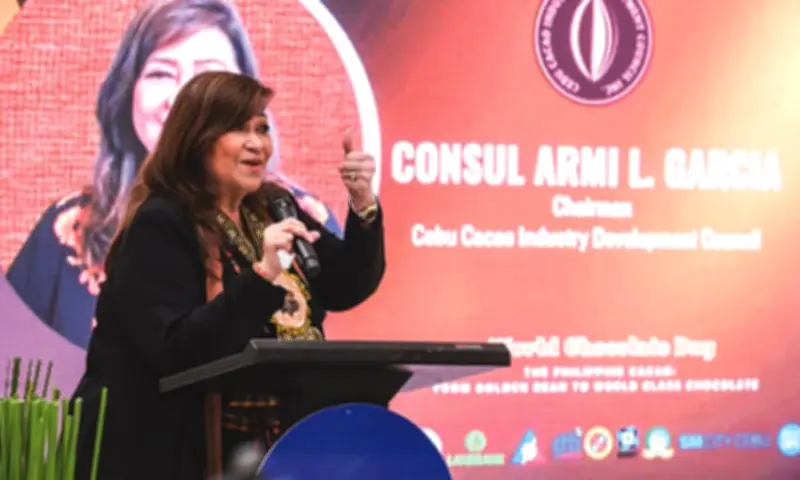
Armi Lopez-Garcia, president of the Philippine Cacao Industry Association (PCIA) and chair of the Philippine Cacao Industry Council, announced the milestone during the Philippine Chocolate Month celebration at SM City Cebu on Friday, July 10, 2026. She explained that cacao has been placed under the Department of Agriculture's (DA) export-oriented high-value crops program due to its significant export potential.
“We are now acknowledged that cacao and our chocolates have export potential,” Lopez-Garcia said. She highlighted that while many European countries are renowned for premium chocolate production, they do not grow cacao. The Philippines, in contrast, cultivates cacao and has a centuries-old tradition of producing tablea and chocolate dating back to the Spanish colonial period. “We want to inform the world that we are going to be players in this important industry,” she added.

Government and Institutional Support
The recognition comes alongside renewed commitments from government agencies and the state-run Land Bank of the Philippines to provide financing, technical assistance, market access, livelihood programs, and investments in value-added processing. During the World Chocolate Day celebration organized by the Cebu Cacao Industry Development Council, the DA urged farmers and stakeholders to move beyond raw cacao bean production and manufacture more value-added chocolate products to boost incomes and competitiveness.
Department of Trade and Industry (DTI) 7 Director Marivic Aguilar emphasized that building a competitive cacao industry requires closer collaboration among farmers, cooperatives, processors, financiers, and government agencies. She said the DTI would continue supporting the sector through its Shared Service Facilities program, business development, market access, and trade promotion initiatives. LandBank reaffirmed its commitment to finance farmers, cooperatives, and chocolate manufacturers, noting that access to credit is essential for farm expansion, processing facilities, and value-added production.
The Department of Labor and Employment pledged to strengthen cooperative farming and livelihood programs, while the Cebu Provincial Government committed to continued support for climate-resilient farming, extension services, and improved market linkages.
Philippine Cacao Industry Roadmap 2026-2030
Lopez-Garcia also announced that the Philippine Cacao Industry Roadmap 2026-2030 has been formally submitted to DA Secretary Francisco Tiu Laurel Jr. The roadmap was developed through extensive consultations with farmers, processors, cooperatives, local government units, and industry stakeholders across Luzon, the Visayas, and Mindanao. “It went through thorough island consultations. We wanted to hear the voices of the industry players,” she said.
The roadmap outlines production targets, quality improvement, market expansion, and area development through 2030. A key strategy is clustering smallholder farmers into cooperatives with shared fermentation facilities and standardized post-harvest systems to consistently produce export-quality beans. Six pilot clusters have been identified nationwide, including the Lamac Multipurpose Cooperative in Cebu, one cooperative in Iloilo, another in Bicol, two in Mindanao, and one cluster to be directly supervised by the PCIA. Lopez-Garcia said the industry hopes the pilot sites will eventually export cacao mass, with full-scale operations targeted next year.
Upcoming Events and Ongoing Initiatives
Lopez-Garcia also announced that the Philippine Cacao Congress will return to Cebu from April 14 to 16, 2027, at the Waterfront Cebu City Hotel and Casino, after this year's event was postponed due to government austerity measures. The congress will feature technical conferences, trade exhibits, business-matching activities, and the Philippine Cacao Quality Awards, whose winners will represent the country in international competitions in France.

Throughout July, regional cacao councils are holding exhibitions, product showcases, and learning sessions as part of Philippine Chocolate Month to promote locally made chocolates. The industry continues to invest in education through its monthly Usapang Cacao at Tsokolate online learning series and is encouraging farmers to intercrop cacao with coconut and other cash crops to improve sustainability and farm incomes.
Lopez-Garcia stressed that stronger collaboration among government agencies, local governments, cooperatives, and the private sector will be crucial as the Philippines seeks to establish itself as a producer and exporter of world-class chocolate.