New research is shedding light on the deep historical roots of the Bisaya-Cebuano language, tracing a significant portion of its modern vocabulary back to its ancient Austronesian ancestors. This study, building on previous work published on December 20, 2025, provides compelling evidence of the language's lineage.
Building on a Foundation of Linguistic Discovery
The investigation is a direct continuation of earlier academic work that examined the Austronesian origins of Bisaya-Cebuano. That prior page discussed the language's Malayan roots, delving into foundational elements like Proto-Austronesian and Proto-Malayo-Polynesian pronouns, as well as basic terms related to the human body. The latest findings extend this exploration into richer, more diverse areas of everyday vocabulary.
Uncovering Origins in Family, Fauna, and More
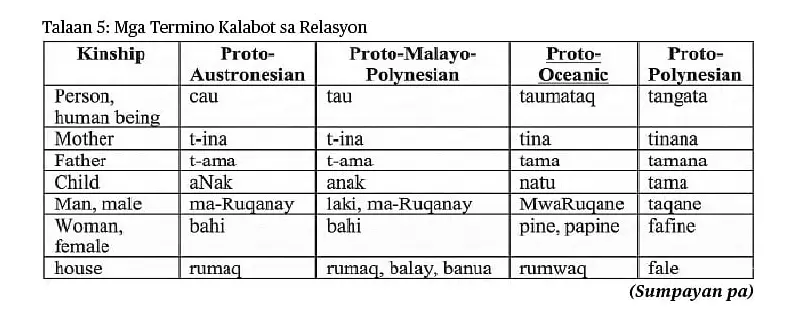
This new chapter of research focuses on four key semantic fields: kinship terms, animal names, color words, and numerals. The analysis presents clear comparative data, organized in detailed tables, showing how contemporary terms are derived from this ancient language family. The conclusion is significant: many, if not most, of the words used by Bisaya-Cebuano speakers today can be traced directly to this ancestral linguistic source.

The study systematically compares modern terms with their reconstructed proto-forms. This method allows linguists and historians to map the evolution of words over millennia, showing how sounds and meanings have shifted while retaining a recognizable core. The evidence solidifies the understanding of Bisaya-Cebuano not as an isolated tongue, but as a vibrant branch of the vast Austronesian family that spans across Southeast Asia and the Pacific.
Implications for Cultural and Historical Understanding
The findings have profound implications beyond pure linguistics. They reinforce the historical and migratory connections of the Filipino people, particularly Visayans, to the broader Austronesian world. Understanding the origin of words for family, nature, and basic concepts provides a window into the shared worldview and experiences of ancient Austronesian-speaking communities.
This research underscores the importance of preserving and studying Philippine languages as repositories of history. It demonstrates that the Bisaya-Cebuano language is a living archive, carrying within its grammar and vocabulary the story of its people's journey and their deep-rooted connections to cultures across islands and seas. The published tables serve as a valuable resource for educators, historians, and anyone interested in the rich tapestry of the Philippines' linguistic heritage.