A fascinating linguistic discovery has emerged, tracing the roots of the Cebuano language back to the ancient ancestors of the Austronesian language family. This revelation is based on a comparative analysis of word lists, highlighting a direct lineage that connects modern Cebuano to its prehistoric linguistic forebears.
Evidence from Proto-Language Word Lists
The findings are grounded in the scholarly work of renowned linguist Robert Blust, specifically from his authoritative book, The Austronesian Languages. Analysis focuses on Table 3 from page 174 of Blust's work, which details word lists for Proto-Austronesian and Proto-Malayo-Polynesian languages. Researchers observed a striking similarity between the Cebuano words and those listed in this foundational table.
Body Part Terminology Shows Clear Lineage
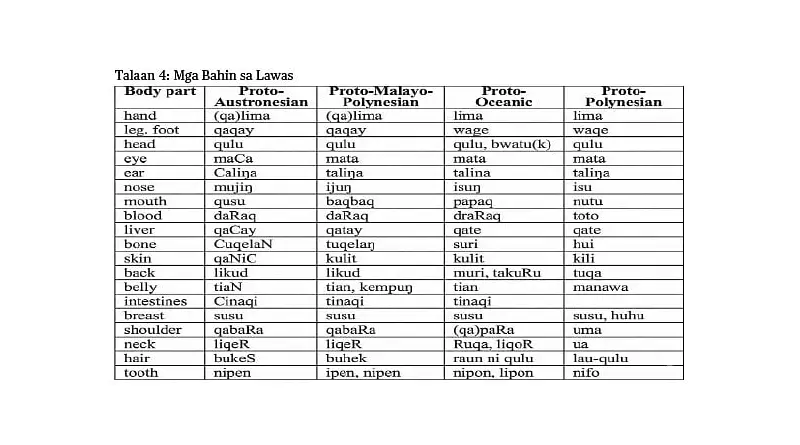
Further compelling evidence comes from an examination of words used to denote parts of the body, as found in a subsequent Table 4. The analysis clearly shows that Bisaya-Cebuano terms are remarkably similar to those marked with an asterisk in the table. This specific correspondence provides strong, tangible proof of a shared vocabulary inherited from a common ancestral tongue.

Confirming a Direct Ancestral Link
The cumulative evidence from these comparative tables leads to a significant conclusion. It demonstrates conclusively that the Bisaya-Cebuano language is a direct descendant of these ancient Austronesian languages. This connection is not merely superficial but points to a deep, historical linguistic evolution that has shaped the language spoken by millions in the Philippines today. The study solidifies the understanding of Cebuano's place within the vast and diverse Austronesian language family, which spans across Southeast Asia and the Pacific.