Weaving Faith and Tradition: Jolito Villatima's 30-Year Legacy of Lukay Crosses in Mandaue City
As dawn breaks over Mandaue City, the streets near its churches come alive not with the usual bustle of traffic, but with a quiet hum of tradition, faith, and reflection. Palm Sunday, marking the solemn start of Holy Week for millions of Christians globally, transforms here into a day of craftsmanship, survival, and heritage. For 56-year-old Jolito Villatima, this day intertwines deep devotion with essential livelihood.
A Family Craft Passed Down Through Generations
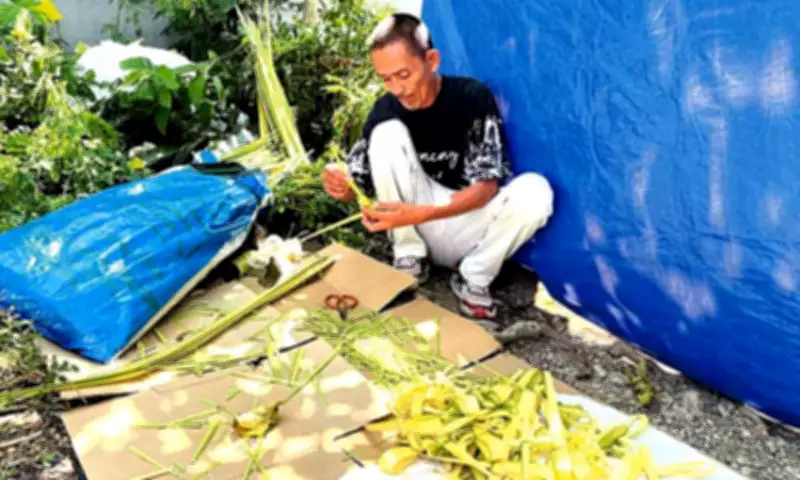
With a sack of meticulously woven palm crosses slung over his shoulder, Villatima makes his annual journey to church grounds, where worshippers gather to commemorate Jesus Christ's triumphal entry into Jerusalem. "We traveled here to Mandaue City and, at the same time, we made it a little trip. I ride a pedicab," he explains, describing the ritual that has defined his life for over three decades. This practice is more than just a job—it is a cherished family tradition.
Villatima learned the art of weaving lukay crosses from his grandmother, who also relied on this craft for her livelihood. "I've been making these palm crosses for 30 years. My grandmother taught me when I was still young. This is how we earn a living; this was also her work before," he shares. Though the process might appear simple, Villatima has refined his skill and speed through years of dedication, producing up to 30 pieces in an hour.

Livelihood and Spiritual Significance
The prices of his creations vary based on intricacy: simple lukay crosses sell three for P20, while those adorned with olive leaves can fetch up to P40 each. On peak days like Palm Sunday, his earnings can soar to P6,000, though material and preparation costs significantly cut into profits. Despite this, demand remains consistently high. "These palm crosses never go unsold. I never end the day with zero sales," Villatima states with quiet pride.
Beyond the economic aspect, Villatima remains steadfast in his spiritual commitment. "Palm Sunday commemorates Jesus' triumphal entry into Jerusalem, marking the start of Holy Week and His journey toward the cross. That's also what my grandmother taught me," he reflects, highlighting how his craft embodies both faith and tradition.
Challenges and Youth Perspectives
However, this enduring tradition faces modern challenges. Villatima notes that younger generations show dwindling interest, often distracted by technology. "The youth today are no longer that interested because of cellphones. But we never know, some children in the provinces or in the mountains might still know how to do this," he muses, expressing hope for the craft's future.
Inside the Nativity of Mary Parish Church in Barangay Canduman, 25-year-old youth volunteer Mark Lester Payot echoes the spiritual depth of Palm Sunday. Having served the parish for seven years, Payot views this time as a period for reflection and companionship with Christ. "Palm Sunday is a time for reflection, especially as we enter Holy Week. It is a time to be with God in His suffering, His pain and even His death for us," he says. He describes the observance as a faith journey, emphasizing prayer and preparation for Easter Sunday's celebration of resurrection.
A Symbol of Perseverance and Devotion
Globally, Palm Sunday is symbolized by palm branches representing victory, peace, and triumph. In Mandaue City, it also tells a story of perseverance, where a simple woven cross carries the weight of history, livelihood, and spiritual devotion. Through Villatima's hands, this tradition weaves together past and present, offering a testament to faith that endures across generations.