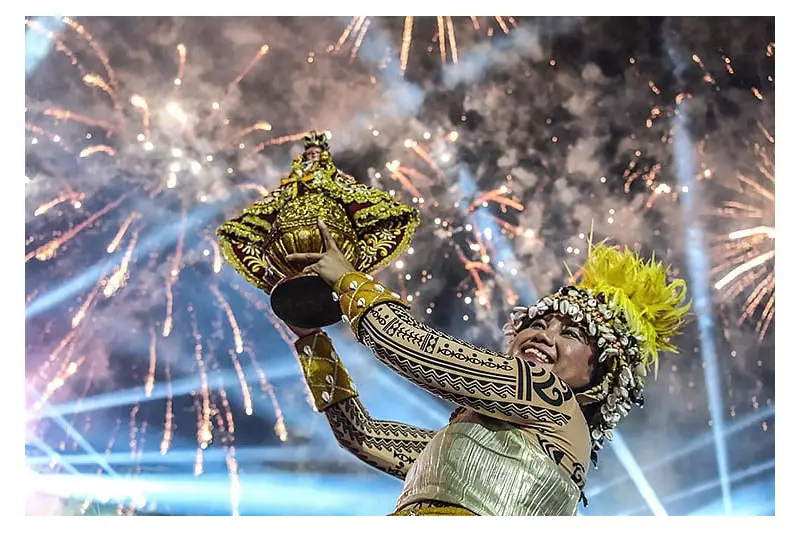
The vibrant streets of Cebu City will once again pulse with energy as the Sinulog sa Dakbayan 2025 culminates on January 12, 2025. The festival queen of the Lumad Basakanon contingent triumphantly raised the image of the Blessed Sto. Niño, symbolizing their dual victory in the street dancing and ritual showdown competitions.
For newcomers, the Sinulog can be an overwhelming blend of fervent chants, relentless drumbeats, and massive crowds. However, beneath the spectacular display lies a profound tradition centuries in the making. To move beyond the confusion and truly grasp the festival's soul, here are essential terms and concepts every first-timer must know.
Faith and Festival: Understanding the Core
A frequent point of confusion is equating Fiesta Señor with Sinulog. While inseparable, they represent distinct facets. Fiesta Señor is the religious feast honoring the Señor Santo Niño, Cebu's patron saint. It focuses on devotional acts like novena masses, the solemn procession, and the fluvial parade, centered at the Basilica Minore del Santo Niño.

Sinulog, in contrast, is the cultural and performative expression of that devotion. It encompasses the street dancing, ritual showdowns, and competitions that dramatize Cebuano faith through movement and music. Simply put, Fiesta Señor is about worship; Sinulog is about expressing that faith through culture.
The festival's origin dates to 1521, when Portuguese explorer Ferdinand Magellan presented an image of the Santo Niño to Queen Juana, wife of Rajah Humabon. The word "Sinulog" derives from "sulog," meaning river current. The iconic two-step dance—one step forward, one step back—mimics this flow, symbolizing the Filipino journey from pagan beliefs to Christianity.
Essential Elements: From Gozos to Barricades
Amid the festivities, you'll hear melodic, repetitive chants known as gozos. These are devotional hymns sung in praise of the Santo Niño. Originally part of novena masses and processions, gozos are now woven into dance performances, transforming the spectacle into a form of prayer and fulfillment of a panata (vow).
You will also encounter human barricades—volunteers or students holding ropes to manage crowd flow. This is a critical safety measure by the Cebu City Government and Sinulog Foundation Inc. to prevent stampedes and ensure safe passage for performers and devotees during major events like processions. Respecting these boundaries is vital for everyone's safety.
More Than a Party: The True Spirit of Sinulog
While the modern Sinulog Festival was institutionalized in 1980 under then-Mayor Florentino Solon, its ritual roots are centuries old. It has since grown into one of the Philippines' largest and most iconic festivals.
It is crucial to understand that Sinulog is not a "Mardi Gras." Unlike secular parties focused on revelry, Sinulog is deeply spiritual. Performers dance as an offering, the music is symbolic, and every movement is a testament to faith. Labeling it as merely a party overlooks the profound devotion at its heart.
Sinulog is a living narrative of Cebuano faith, history, and identity. By understanding these key concepts, first-time visitors can truly appreciate why millions gather each year to fervently shout "Pit Señor!"—seeing not just a festival, but a community's soul in motion.