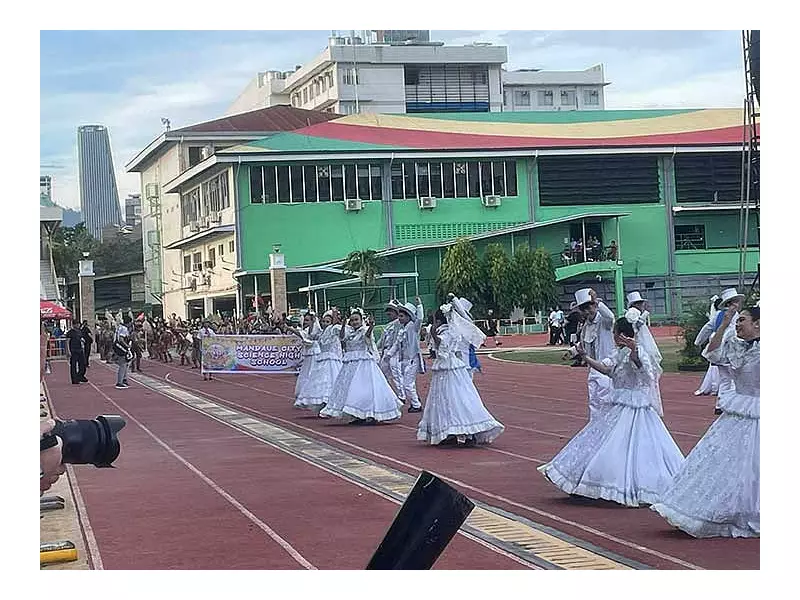
The vibrant energy of the Sinulog Festival has officially returned to Cebu. On Friday, January 9, 2026, the opening salvo for Sinulog 2026 was held at the Cebu City Sports Center, marking the start of the grand cultural and religious celebration.
A Gathering of Schools and Performers
A diverse array of 17 participating groups converged for the event, showcasing the widespread community involvement in Sinulog. The list of participants includes major educational institutions and performance troupes from across the region.
The participating groups are: University of Southern Philippines Foundation, Cebu Institute of Technology–University, Cebu Technological University, University of the Visayas, Cebu Aeronautical Technical School, University of San Carlos, Abellana National School, Lapu-Lapu–Cebu International College, Cebu Normal University, Cebu Doctors University, MJR Performing Arts, University of San Jose–Recoletos, University of Cebu, Indiana Aerospace University, Mandaue Science High School, Mandaue School for the Arts, and Salazar College of Science and Institute of Technology.

Understanding the Heart of Sinulog
For first-time visitors, the Sinulog can be an overwhelming spectacle of shouts, drumbeats, and massive crowds. However, it is crucial to recognize that Sinulog is more than just a party; it is a centuries-old tradition rooted deeply in Cebuano faith and history.
A key distinction lies between Fiesta Señor and Sinulog. Fiesta Señor represents the religious aspect honoring the Señor Santo Niño, involving novena masses at the Basilica, fluvial and solemn processions, and other devotions. In contrast, Sinulog is the cultural expression, encompassing the famous street dancing, ritual performances, and competitions—a manifestation of faith through art and movement.
The History and Meaning Behind the Celebration
The festival's origins trace back to the arrival of Christianity in 1521, when Ferdinand Magellan presented the image of the Santo Niño to Queen Juana. The term "Sinulog" derives from the Cebuano word "sulog," meaning river current. The iconic two-step forward, one-step backward dance motion symbolizes the flow of water and the journey of Filipino faith from paganism to Christianity.
Integral to the devotion are the Gosos, devotional songs of praise like "Bato Balani sa Gugma." These are incorporated into the dance choreography to emphasize that the performance is not merely entertainment but a form of prayer.
While the dance ritual is ancient, the modern Sinulog Festival as it is known today was institutionalized in 1980 under the leadership of then Cebu City Mayor Florentino Solon, giving structured form to the celebration and promoting Cebuano culture.
Attendees will also notice volunteers forming human barricades with ropes. This critical crowd control measure ensures the safety of thousands, prevents stampedes, and provides clear pathways for dancers and procession images. Respect for these volunteers is essential, as they perform a vital security function.
It is a misconception to label Sinulog as a "Mardi Gras." Unlike Mardi Gras, which is primarily for revelry, Sinulog is deeply rooted in religious devotion. Every dance is an offering, and every shout of "Pit Señor!" is a prayer. Calling it Mardi Gras diminishes the profound spiritual significance at the festival's core.
Ultimately, Sinulog transcends colorful costumes and loud street parties. It is a living tradition of faith and community. As the 2026 festivities unfold, participants and observers are encouraged to look beyond the spectacle and connect with the heartfelt devotion to the Holy Child that defines this unique Cebuano celebration.