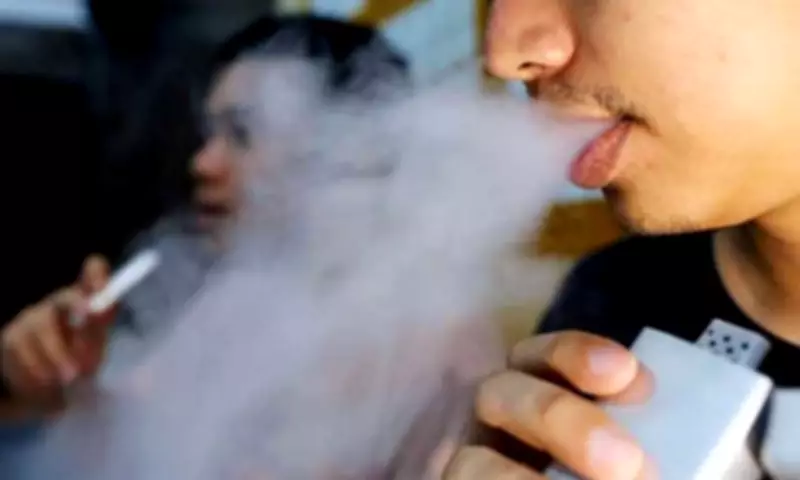
In a powerful show of unity, seven former secretaries of the Department of Health (DOH) in the Philippines have issued a joint statement, throwing their full support behind the current DOH's call for a total ban on vaping products across the nation. The former health chiefs, who served under various administrations, declared that a "poison" should not be made available to the Filipino people, especially the youth.
Unprecedented Call for Legislative Action
The group of esteemed former officials includes Dr. Jaime Galvez Tan (1995), Dr. Carmencita Reodica (1996–1998), Dr. Manuel Dayrit (2001–2005), Dr. Esperanza Cabral (2010), Dr. Enrique Ona (2010–2014), Dr. Paulyn Rosell-Ubial (2016–2017), and Dr. Francisco Duque III (2005–2009, 2017–2022). They collectively emphasized that the time has come for the Philippine government to pass a law that outright prohibits vape products.
"The Department of Health, through Secretary Teodoro Herbosa, called for a total ban on vape products, describing them as poison. He rightfully questioned the logic of giving this poison to Filipinos and the youth," the former DOH heads stated. "We urge President Ferdinand Marcos Jr. and Congress to immediately enact a ban on vape products in the country."

Regulatory Measures Deemed Insufficient
The former secretaries argued that existing regulatory frameworks for vaping have proven entirely inadequate in curbing its widespread proliferation. They highlighted that partial restrictions and fiscal interventions, such as taxation, are simply not enough to combat the rising tide of nicotine addiction among the younger population.
"Partial restrictions and fiscal intervention do not suffice to stem the tide of nicotine addiction among our youth. These incremental measures leave room for continued nicotine addiction among our people," they explained, stressing that only a comprehensive ban can effectively address the public health crisis.
Debunking Industry Claims on Safety
Furthermore, the former health officials strongly refuted claims made by the tobacco industry that vaping is a safer alternative to traditional cigarettes. They pointed out that there is no scientific evidence to support such assertions. On the contrary, they warned that vapes could be even more addictive due to their higher nicotine concentrations and efficient delivery mechanisms.
"In fact, vapes are even more addictive, considering their higher concentration of nicotine and efficient delivery mechanism. The nicotine and other harmful chemicals in vape products can lead to cardiovascular disease, cancer, and lung illnesses," they cautioned, underscoring the severe health risks associated with vaping.
Philippines Lagging Behind ASEAN Neighbors
The group also expressed concern that the Philippines is falling behind its regional counterparts in addressing this issue. They noted that eight Southeast Asian nations have already implemented total bans on vaping, putting the Philippines at risk of becoming a dumping ground for products rejected by other countries.
"We are losing ground compared to our ASEAN neighbors, who have already enforced a total vape ban. We fear we will become the dumping ground–as if a global ashtray–for vapes that other countries will reject," they stated, calling for urgent action to align with international public health standards.
This collective stance from former DOH leaders amplifies the earlier appeal made by current Health Secretary Teodoro Herbosa, who has been advocating for lawmakers to pass legislation that would effectively ban vaping nationwide. Herbosa has consistently argued that vaping should not be viewed as an alternative to smoking, as it may pose even worse adverse health effects than conventional cigarettes.