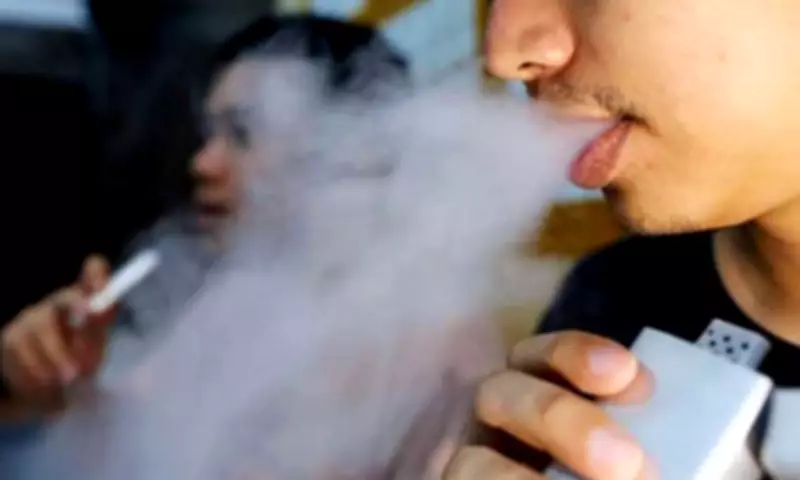
Health Justice Philippines Advocates for Comprehensive Vape Ban to Protect Public Health
In a significant public health appeal, the advocacy group Health Justice Philippines has called on the National Government to implement a complete ban on vaping products, rather than continuing with mere regulation. The statement was issued on Sunday, March 1, 2026, emphasizing that a ban offers superior protection compared to higher taxes or uniform regulations on tobacco and vape items.
Stronger Measures Needed to Prevent Health Crises
Health Justice Philippines argues that a vape ban is essential to avoid repeating tragic incidents, such as the death of a 22-year-old male with no smoking history but two years of consistent vape use. The individual succumbed to E-cigarette or Vaping Use-Associated Lung Injury (EVALI), highlighting the severe risks associated with these products. "This is the ideal step our government must undertake to prevent illnesses and deaths related to tobacco or vape use," the group stated, underscoring the urgency of the matter.
The organization believes that such a measure would provide the strongest possible safeguard for public health while ensuring administrative and regulatory clarity. They contend that current approaches, including taxation, are insufficient to curb the growing epidemic of vaping, particularly among younger demographics.

Department of Health Backs the Call for Legislative Action
The Department of Health (DOH) has thrown its support behind this initiative, urging lawmakers to pass legislation that would outlaw vaping nationwide. Health Secretary Teodoro Herbosa, speaking during the PinaSigla KalyeSugan event in Quezon City, pointed to the actions of neighboring Southeast Asian countries as a model for the Philippines to follow.
"Many countries have already banned vaping. In Southeast Asia, eight countries have banned it, only three of us are merely regulating it. We should follow the example of other countries that have actually banned it," Herbosa emphasized. He specifically mentioned Myanmar, Brunei, Cambodia, Laos, Singapore, Thailand, Timor-Leste, and Vietnam as nations that have implemented comprehensive vape bans, while Indonesia, Malaysia, and the Philippines continue to permit these products.
Ineffective Regulations and Rising Youth Addiction
Secretary Herbosa criticized the current regulatory framework, noting that since the passage of the Vape Regulation Act in 2022, vape usage has surged, especially among young people. "There is a Vape Law but more and more young people are now vaping. Sin tax law has led to a drop in smoking. But young people are more addicted to vape now," he observed.
He further highlighted the pervasive presence of vape stores in malls and 24-hour outlets, which often market vaping as a safer alternative to smoking. "They are also pushing for vaping as an alternative to smoking. It is not an alternative to smoking. It is worse," Herbosa asserted, reinforcing the need for a ban to counteract misleading promotions and protect public health.
The call for a vape ban represents a critical step in addressing the escalating health concerns linked to vaping, with both Health Justice Philippines and the DOH advocating for stronger legislative measures to safeguard Filipinos from potential harm.