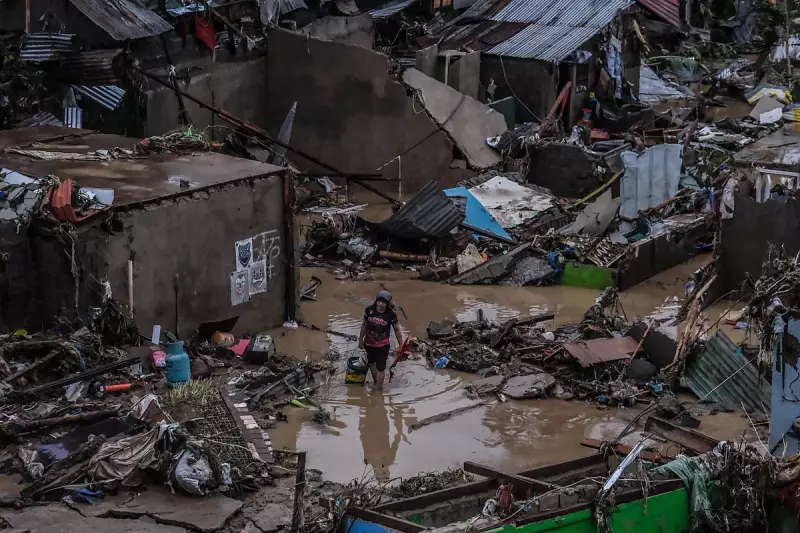
The devastating floods triggered by Typhoon Tino in early November have unleashed a secondary health crisis across Cebu, with leptospirosis cases rapidly emerging and claiming lives in the storm's aftermath.
Tragic Loss Highlights Hidden Danger
What began as massive flooding on November 4, 2025, has transformed into a public health emergency. Verna Sangilan of Talisay City experienced this tragedy firsthand when her partner, 27-year-old Jerwen Karl Abellana, succumbed to leptospirosis on November 16 after just four days of battling the infection.
Abellana's case illustrates the stealthy nature of this waterborne disease. Despite having no visible wounds, exposure to contaminated floodwaters during Typhoon Tino allowed the bacteria to enter his system. His initial fever on November 12 progressed rapidly to vomiting, red eyes, and ultimately multiple organ failure despite intensive care at Chong Hua Hospital.

Massive Scale of Exposure
The conditions for widespread infection were created when Typhoon Tino dumped 183 millimeters of rainfall on Cebu between November 3-4, equivalent to a month and a half's worth of rain in just 24 hours. The overwhelming downpour caused the Mananga River to overflow, submerging homes up to second-floor levels in multiple cities including Cebu, Talisay, Mandaue, and several towns.
According to infectious disease specialist Dr. Christina Tan-Bonghanoy, nearly all Cebuanos became vulnerable to leptospirosis due to the disaster's magnitude. Provincial data confirms that at least 46,983 individuals are currently staying in evacuation centers, most presumed to have been exposed to contaminated floodwaters.
Health Officials Race Against Time
Learning from the lessons of Typhoon Ondoy in 2009, which resulted in 561 suspected leptospirosis cases and 67 deaths at Philippine General Hospital alone, the Cebu Provincial Health Office activated a One Health framework immediately after Tino's exit.
Provincial health consultant Dr. Nikki Catalan explained their aggressive approach: "We blasted information on social media, did interviews before the rise in cases, and used our emergency response tracker to transparently show medicine distribution."
The province established a Leptospirosis Task Force just four days after the typhoon, bringing together provincial, district, and private hospitals with infectious disease specialists and the Department of Health.
Prevention and Treatment Efforts
Health authorities have distributed approximately 10,000 doxycycline tablets with 40,000 more scheduled for dispatch across Cebu municipalities. Dr. Bonghanoy emphasized the importance of the "golden period" - the first 24 to 72 hours after exposure when doxycycline can significantly help prevent infection.
However, she cautioned that the medication doesn't guarantee absolute protection, especially for residents still cleaning mud from their homes. "For people who are still cleaning their houses, they are supposed to be taking one Doxycycline once a week," she advised.
The Provincial Health Office has made emergency purchases of intravenous medications and is developing a dedicated leptospirosis hotline to handle public queries and provide assistance.
Understanding the Threat
Leptospirosis is caused by pathogenic bacteria from the genus Leptospira, typically transmitted through water contaminated with animal urine. According to the World Health Organization, the disease can spread through direct or indirect contact with infected animals, particularly rats, but also pigs, dogs, and sheep.
Dr. Albert Bryan Lim, another Cebuano infectious disease specialist, noted that the bacteria can enter through microscopic cuts or through the eyes and mouth. Even routine activities like rubbing one's eyes after touching contaminated surfaces or cleaning mud from flooded homes can lead to infection.
The disease typically manifests in two phases: initial flu-like symptoms followed by a temporary recovery before a potentially severe second phase that can cause kidney or liver failure, or meningitis.

As Cebu continues rebuilding from Typhoon Tino's destruction, health officials urge continued vigilance. The receding floodwaters have left behind an unseen enemy in the mud and puddles, making every fever and exposure a potential health emergency in the critical weeks ahead.