The Government of the Philippines, in collaboration with the Department of Health, the National Nutrition Council, and UNICEF, has officially launched a groundbreaking partnership under the UNICEF-led Child Nutrition Fund (CNF). This initiative provides P756.2 million (USD 13.2 million) in catalytic financing to bolster the country's ongoing efforts to expand high-impact nutrition interventions across the nation, with a particular focus on the Bangsamoro Autonomous Region in Muslim Mindanao (BARMM).
Catalyzing Investment for Child Health
The CNF is designed to support the Government's strategies to reduce stunting and wasting through a catalytic financing model. This innovative approach links domestic public resources with global funding, driving increased public investment in nutrition. These combined investments aim to make essential nutrition services more accessible for mothers and young children, particularly during the critical first 1,000 days of a child's life, while simultaneously strengthening the systems required to sustain and expand these results.
Through this partnership, the Philippines seeks to reach more than 8.4 million children under the age of five and 1.2 million pregnant women. These beneficiaries will gain improved access to quality care in health facilities and communities, along with stronger protection during the pivotal early stages of development.

Addressing a Critical Public Health Challenge
Undernutrition remains one of the most pressing challenges for children in the Philippines. Statistics reveal that one in four children under five is stunted, and over half a million suffer from wasting. The situation is most severe in BARMM, where a higher proportion of children are affected by undernutrition, putting them at risk of long-term consequences on growth, learning, and development.
This partnership will enhance service delivery across communities, supported by robust systems including supplies and nutrition data utilization for better targeting and follow-through. Addressing undernutrition begins prenatally and continues post-birth, with nearly one in five women nutritionally at risk and 21.7% of pregnant women experiencing iron deficiency anemia, which can adversely affect maternal health and fetal growth.
Strategic Partnerships and Future Impact
UNICEF Philippines Representative Kyungsun Kim emphasized the importance of this initiative, stating, "Investing in nutrition is one of the most powerful ways to improve every child's survival, learning, and long-term well-being—benefits that extend far beyond childhood. Through the Child Nutrition Fund, we are helping more families access the right support at the right time, especially during the first 1,000 days."
Dr. Kadil M. Sinolinding, Jr., Minister of Health for BARMM, highlighted the regional focus, noting, "In BARMM, where the burden of undernutrition is highest, strengthening nutrition services for mothers and young children remains a priority, particularly in harder-to-reach communities. This partnership with UNICEF and the Child Nutrition Fund will strengthen the delivery of essential nutrition interventions and support children’s growth and development. It is also an investment in BARMM’s future—when children are well-nourished, they are more likely to stay healthy, learn well, and contribute to their communities and the local economy."
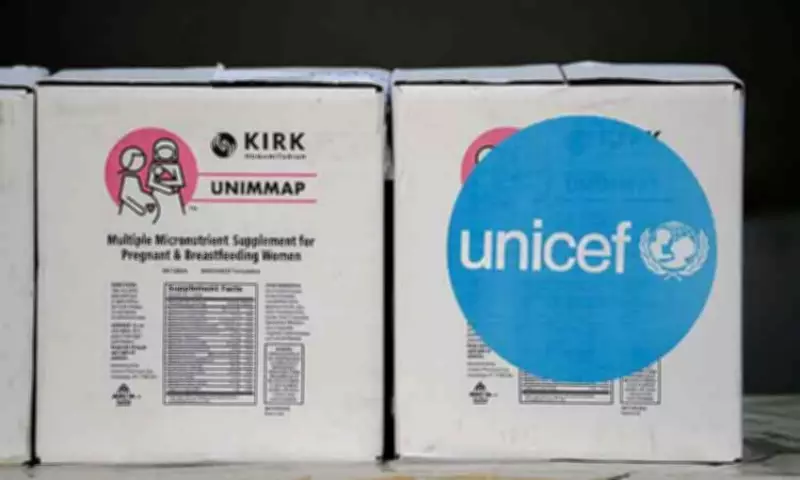
This partnership also complements World Bank financing, enabling the expansion of access to maternal nutrition services, such as multiple micronutrient supplements for pregnant women, and strengthening government systems to deliver sustainable, high-quality nutrition programs. UNICEF continues to work with the Government and partners to accelerate progress on maternal and child nutrition, ensuring that every child and family, especially those in vulnerable communities, receives the support they need.