Iran Accuses United States of Violating Ceasefire Conditions
Barely twenty-four hours after a two-week ceasefire agreement was announced by U.S. President Donald Trump, Iranian officials have leveled serious accusations against the United States, claiming violations of multiple conditions within the fragile truce framework. Parliament Speaker Mohammad Bagher Ghalibaf publicly objected to what he described as three distinct breaches of the ten-point proposal, casting a shadow over the nascent peace process.
Alleged Violations Detailed by Iranian Official
In a detailed post on social media platform X, Ghalibaf outlined the specific clauses he believes have been disregarded by the United States and its allies. The first point of contention revolves around the continuation of Israeli military actions targeting Hezbollah positions within Lebanon. Ghalibaf emphasized that the ceasefire terms explicitly called for an immediate cessation of hostilities across all regions, including Lebanon, a stance that has been echoed by Prime Minister Shehbaz Sharif in separate communications.
The second alleged violation involves an unmanned aerial vehicle incursion into Iranian airspace. Reports indicate that this drone was successfully intercepted and destroyed over the city of Lar, located in Fars Province. This event directly contravenes provisions within the agreement that strictly prohibit any further breaches of Iran's sovereign airspace during the ceasefire period.

Thirdly, Ghalibaf pointed to the Trump administration's firm position regarding Iran's nuclear capabilities. The sixth clause of the framework reportedly acknowledges Iran's right to uranium enrichment activities, yet American officials have publicly stated they will not accept any Iranian enrichment capabilities as part of a final conflict resolution. This contradiction has become a significant point of diplomatic friction.
Regional Concerns and Diplomatic Warnings
Prime Minister Shehbaz Sharif independently confirmed receiving multiple reports of ceasefire violations occurring across various conflict zones. In his own social media statement, Sharif issued a stern warning that such actions fundamentally undermine the spirit and integrity of the peace process. He urgently appealed to all involved parties to demonstrate maximum restraint and fully respect the agreed-upon two-week ceasefire window.
"I earnestly and sincerely urge all parties to exercise restraint and respect the ceasefire for two weeks, as agreed, so that diplomacy can take a leading role in achieving a peaceful settlement of the conflict," Sharif emphasized, highlighting the critical importance of maintaining the truce to allow diplomatic channels to function effectively.
United States Rebuttal and Clarification
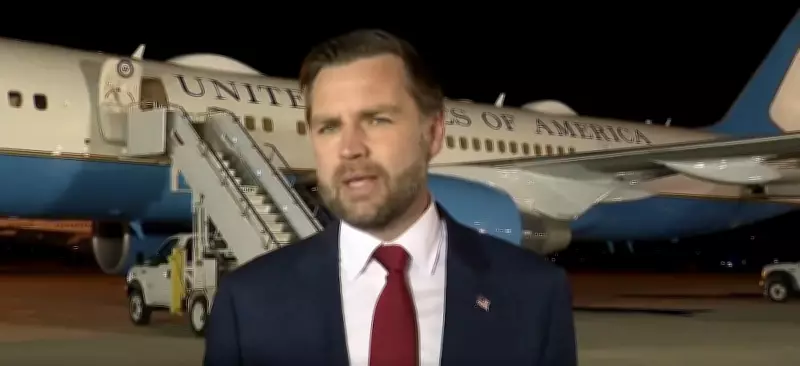
U.S. Vice President JD Vance offered a pointed response to the Iranian allegations during a press briefing with reporters. Vance categorically denied that Lebanon was ever included within the specific ceasefire terms negotiated between the United States and Iran. He characterized the Iranian objections regarding Lebanese hostilities as irrelevant to the bilateral agreement.
"If Iran wants to let this negotiation fall apart over a conflict where they were getting hammered over Lebanon, which has nothing to do with them and which the United States never said was part of the ceasefire, that's ultimately their choice. We think that would be dumb, but that's their choice," Vance stated bluntly, underscoring the American position that the ceasefire's scope was clearly defined and limited.
Fragile Diplomacy at Critical Juncture
These mutual accusations emerge at an exceptionally delicate moment for the two-week truce arrangement. Regional leaders and international observers are attempting to stabilize a volatile situation following months of steadily escalating tensions and military confrontations. While Iranian authorities insist that the United States is failing to honor its commitments under the agreement, Washington maintains that the terms were explicitly outlined and do not extend to cover the actions of third-party actors operating in Lebanon or other peripheral conflict zones.

The diplomatic standoff threatens to unravel the ceasefire entirely, potentially reigniting broader regional hostilities. Both sides appear entrenched in their interpretations of the agreement's provisions, with little immediate indication of compromise. The coming days will prove crucial in determining whether diplomatic efforts can salvage the truce or whether the region will descend back into open conflict.