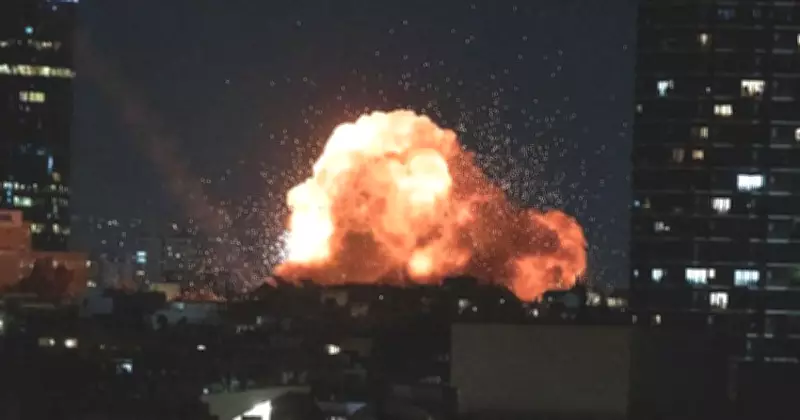
Philippines Confronts Dire Consequences from Middle East Military Strike
The massive military assault launched by the United States and Israel against Iran on Saturday, February 28, 2026, poses severe and immediate threats to the Philippines, despite the nation's geographical distance of 7,200 to 8,864 kilometers from the conflict zone. This unprecedented attack demands urgent national preparedness to mitigate its far-reaching impacts.
Economic Shockwaves from Oil Price Surge
The Strait of Hormuz, a critical maritime chokepoint through which twenty percent of global oil supplies transit, faces potential disruption due to the conflict. Any significant blockage could trigger a dramatic spike in Brent crude prices, with analysts warning that a mere ten-dollar increase would inflict an annual economic loss of approximately thirty-four point nine billion pesos on the Philippines. This would inevitably cascade into higher costs for electricity, transportation, and essential consumer goods, straining household budgets nationwide.
Safety of Overseas Filipino Workers in Jeopardy
Directly imperiled are the lives and livelihoods of an estimated two point one six million Filipino workers residing in the war-stricken Middle East region. The Philippine government now confronts the monumental tasks of evacuation and resettlement, compounded by the potential loss of the substantial economic contributions these overseas workers provide. Their annual remittances, valued at around ten billion dollars, are a vital pillar of the national economy, and any disruption threatens financial stability.

Food Security and Geopolitical Entanglement
Food supply chains are also at risk, facing scarcity and inflated prices due to threatened cuts in fertilizer imports. A staggering sixty-six percent of the Philippines' fertilizer supply originates from Gulf countries, now embroiled in conflict. Furthermore, the nation's strong alliances with the United States and Israel, coupled with the presence of American military forces on Philippine soil, could inadvertently make the country a target for retaliation from Iran and its allies, potentially dragging it into a broader war.
Escalating Violence and Regional Instability
The assassination of Iran's Supreme Leader Ayatollah Ali Khamenei, which resulted in significant civilian casualties including numerous elementary school children, has ignited profound hatred and vows of unprecedented retaliation from Tehran. U.S. President Trump's declaration that heavy bombings will continue underscores the grim reality: this is a full-scale war with no immediate end in sight. The Philippines must brace for a prolonged period of regional instability with global repercussions.