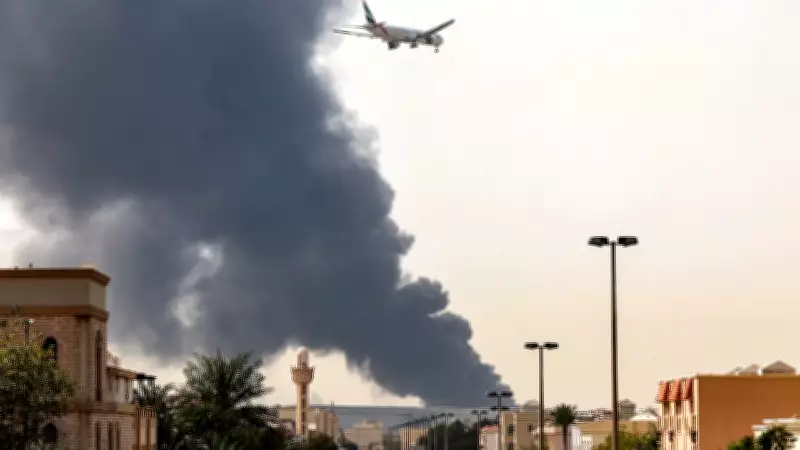
UAE Implements Airspace Shutdown Following Iranian Missile and Drone Incursions
The United Arab Emirates (UAE) has enacted a temporary closure of its national airspace this Tuesday, March 17, 2026, as its military forces successfully intercepted multiple incoming missile and drone attacks originating from Iran. This decisive action was confirmed by the UAE's General Civil Aviation Authority, which described the move as an "exceptional precautionary measure" designed to safeguard passenger and pilot safety while protecting the nation's territorial integrity.
Escalating Regional Tensions Trigger Security Response
The airspace shutdown follows a significant Iranian drone assault on Monday that ignited a fuel tank at Dubai International Airport, one of the world's most critical aviation hubs. This incident underscores the intensifying conflict across the Middle East, where Israel has ramped up airstrikes against Iran-backed militant groups in Lebanon. In retaliation, Iran has launched a series of drone and missile strikes impacting several nations throughout the Gulf region, exacerbating an already volatile geopolitical landscape.
Global Energy Markets React to Strait of Hormuz Tensions
Concurrently, fears of a global energy crisis have surged as Iran has moved to block the Strait of Hormuz, a vital maritime passage responsible for transporting approximately one-fifth of the world's oil supply. This disruption has propelled Brent crude oil prices to soar beyond $100 per barrel, highlighting the economic ramifications of the ongoing hostilities. In response, U.S. President Donald Trump previously urged European leaders to deploy warships to ensure the strait remains open, a request that was firmly rejected by European officials.

Diplomatic Standoff and Military Exchanges Intensify
Iranian Foreign Minister Abbas Araghchi has asserted that the Strait of Hormuz remains open, but explicitly not for the United States, Israel, or their allies, while simultaneously denying reports that Tehran is seeking a ceasefire. Since the initial U.S. and Israeli attacks on Iran over two weeks ago, Tehran has regularly deployed drones and missiles targeting Israeli positions, American military bases, and key energy infrastructure across the Gulf. In a recent development, the Israeli military reported a new missile salvo from Iran near the Sea of Galilee early Tuesday morning, though no casualties were recorded from this specific attack.
The UAE's airspace closure represents a critical moment in the broader Middle East conflict, reflecting heightened security measures as regional and global powers navigate escalating military engagements and diplomatic friction.