US Central Command Identifies Four Soldiers Killed in Iran Drone Attack in Kuwait
The US Central Command has officially released the identities of four out of the six American soldiers who lost their lives due to a suspected Iranian drone attack. The incident occurred when the drone struck a US command center located at Port Shuaiba in Kuwait on Sunday, resulting in significant casualties.
Rising Casualty Toll and Details of the Attack
Initially, the US Central Command reported that three soldiers had been killed in the assault. However, by Monday, the number of fatalities had doubled to six, highlighting the severity of the attack. One of the soldiers succumbed to injuries after being transported to a medical facility, while two others were recovered from collapsed buildings at the site.
The attack has drawn international attention, underscoring ongoing tensions in the region. The identification of the fallen personnel marks a somber moment for the US military and their families.

Profiles of the Fallen Soldiers
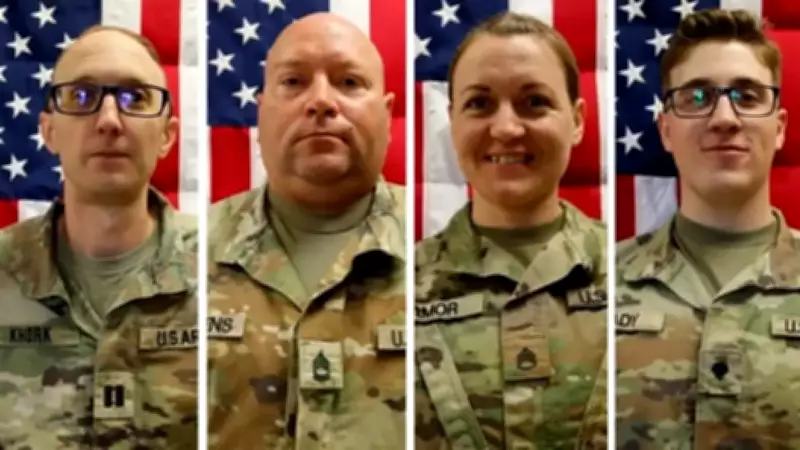
The four soldiers identified are all members of the US Army Reserve. Their names and backgrounds have been released as follows:
- Captain Cody Khork, 35: A resident of Florida, Captain Khork had previously been stationed in Saudi Arabia, Guantanamo Bay, and Poland during his military career.
- Sergeant Noah Tietjens, 42: Hailing from Nebraska, Sergeant Tietjens had been assigned to Kuwait on two separate occasions prior to this incident.
- Sergeant Nicole Amor, 39: Originally from Minnesota, Sergeant Amor had deployments in both Kuwait and Iraq, showcasing her extensive service in the region.
- Sergeant Declan Coady, 20: A resident of Iowa, Sergeant Coady enlisted in the Army Reserve three years ago, representing the younger generation of service members.
These soldiers' diverse backgrounds and service histories reflect the broad reach of US military operations and the personal sacrifices made by reservists in conflict zones.
Broader Implications and Military Response
The drone attack in Kuwait has raised concerns about regional security and the escalating use of unmanned aerial vehicles in military conflicts. The US Central Command is likely to reassess its defensive measures in the area to prevent future incidents.
This event also highlights the ongoing geopolitical tensions involving Iran and its neighbors, with potential repercussions for international relations and military strategies in the Middle East. The loss of these soldiers serves as a stark reminder of the human cost of such conflicts.