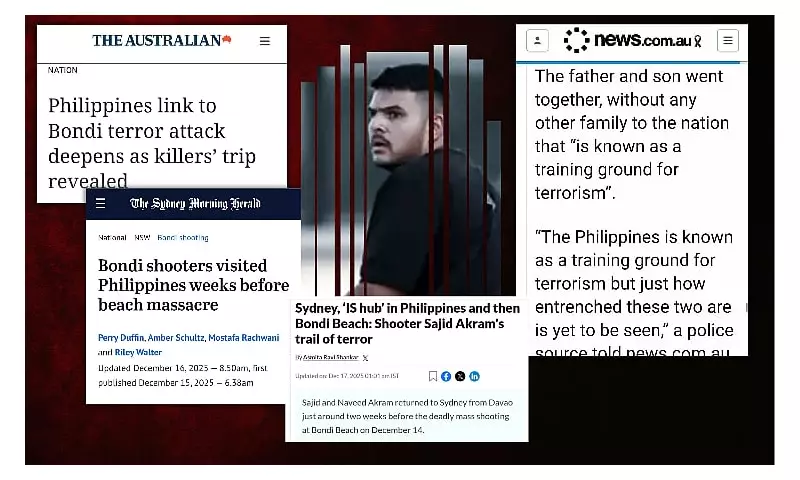
Philippine authorities have issued a strong denial following international reports suggesting the country served as a training ground for individuals involved in a recent deadly attack in Australia. The government has labeled such characterizations as misleading and without factual basis.
Official Rejection from Malacañang and Security Council
On Wednesday, December 17, 2025, Palace Press Officer Attorney Claire Castro conveyed President Ferdinand "Bongbong" Marcos Jr.'s firm stance. The President strongly rejects the sweeping statement and the misleading characterization of the Philippines as an Isis training hotspot, Castro stated. This response came after reports circulated linking the Philippines to the father-and-son suspects in the December 14 mass shooting at Bondi Beach in Sydney, Australia, which resulted in 16 fatalities, including one suspect.
The National Security Council (NSC) supported this position, confirming an investigation found no proof to back the allegations. The council verified that the two individuals, Sajid Akram and his son Naveed, entered the Philippines. They traveled via Manila to Davao City between November 1 and 28, 2025, with Sajid using an Indian passport and Naveed an Australian one.

However, the NSC was emphatic that their presence alone does not substantiate claims of terrorist activity. "There is no valid report or confirmation that the two received any form of military training while in the country, and no evidence supports such a claim at present," the council said. They further argued that the duration of their stay would not have allowed for any meaningful or structured training.
Mindanao: Pushing Back Against Outdated Narratives
The NSC also addressed broader claims about Mindanao's security situation, calling reports that describe the region as a hotspot for violent extremism or Islamic State ideology as "outdated and misleading." The council highlighted the significant progress made by Philippine security forces since the 2017 Marawi Siege.
Isis-affiliated groups in the country have been significantly degraded, with remnants fragmented, deprived of leadership, and operationally weakened, the statement detailed. This context, officials argue, makes the recent allegations even less credible.
Echoing this sentiment, Honorary Consul of Finland and European Chamber of Commerce of the Philippines Chairman Antonio Peralta criticized the unverified social media discourse implying the suspects had terrorist connections in Mindanao. "Mindanao has been a punching bag for reckless comments like that," Peralta lamented, noting the island is often unfairly singled out during international security incidents without proof.
"Mindanao is such a convenient excuse for them to say. We will not stand for that because matagal na ito (this has been going on for a long time)," he added, demanding concrete evidence for such serious accusations.
Ongoing Vigilance and International Cooperation
Despite the firm denials, the Philippine government is not taking the incident lightly. Malacañang announced that President Marcos has directed the Anti-Terrorism Council and other concerned agencies to remain vigilant against any potential terrorist activity. The administration also pledged to continue strengthening cooperation with international partners to ensure national security.
The Armed Forces of the Philippines (AFP) is conducting its own probe. AFP Chief of Staff General Romeo Brawner Jr. confirmed that they are investigating the activities of the father-and-son duo during their stay in the country to leave no stone unturned.
The NSC concluded its statement by emphasizing the importance of evidence-based reporting and responsible public discourse, urging media and the public to avoid spreading unverified information that could harm the country's reputation and stability.