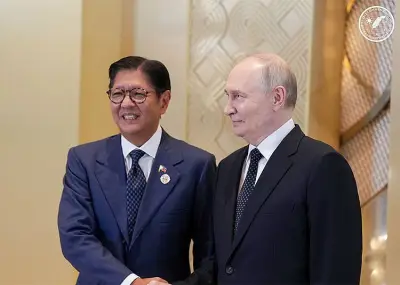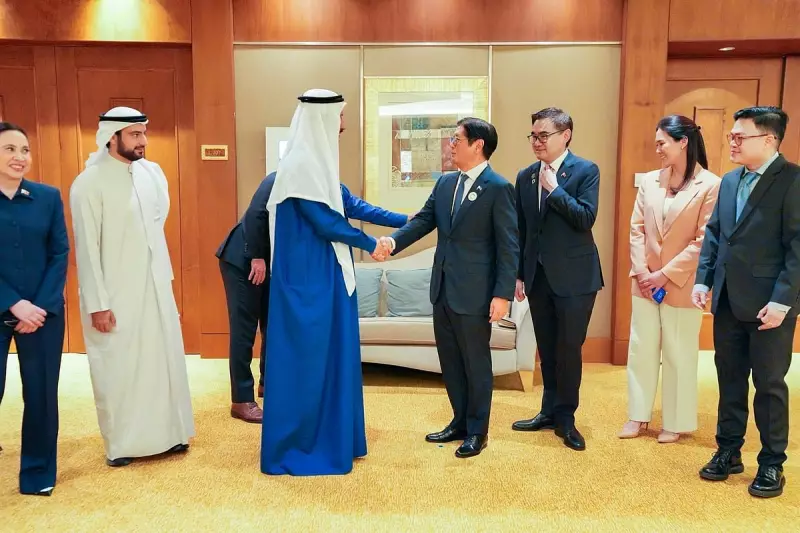
President Ferdinand "Bongbong" Marcos Jr. arrived back in the Philippines on Wednesday, January 14, 2026, wrapping up a significant two-day official trip to the United Arab Emirates. The visit proved highly productive, resulting in landmark agreements designed to strengthen economic and security bonds between the two nations.
Strengthening Ties at the Abu Dhabi Sustainability Week
The President's itinerary included participation in the prestigious Abu Dhabi Sustainability Week (ADSW), a major global summit addressing urgent environmental and developmental challenges. Marcos engaged with other world leaders in discussions aimed at creating a "future-ready world," with a sharp focus on critical areas like energy security, water access, food production, sustainable finance, and environmental protection.
"I held productive talks centered on vital sectors such as energy, water, finance, food, and the environment—issues that impact every Filipino, both here and overseas," President Marcos stated. He used the platform to reaffirm the Philippines' dedication to sustainable development and enacting policy reforms that tackle complex global problems.

Historic Agreements Signed: Trade and Defense
The core achievements of the visit were the signing of two pivotal documents: the Philippines–UAE Comprehensive Economic Partnership Agreement (CEPA) and a Memorandum of Understanding (MOU) on Defense Cooperation.
The CEPA marks a historic milestone as the first free trade agreement between the Philippines and a Middle Eastern nation. This pact is expected to dramatically widen Philippine export opportunities in the lucrative Gulf market while also diversifying the country's sources for essential imports. A crucial component of the deal involves further opening trade in services.
"The enhanced market access granted by the UAE for Filipino service providers is a clear acknowledgment of the professional skill and excellence of Filipinos in these fields," Marcos emphasized, highlighting the substantial role Filipino professionals and workers already play in the UAE's economy.
Concurrently, the defense MOU establishes a robust framework for security collaboration. President Marcos underlined its strategic importance for the ongoing modernization program of the Armed Forces of the Philippines (AFP).
"This defense cooperation agreement will serve as a strong platform for working with the UAE on advanced technologies, particularly in areas like unmanned aerial systems, electronic warfare, and naval systems," he explained. The pact also encompasses cooperation in education and training, intelligence sharing, and joint efforts in counter-terrorism, maritime security, and peacekeeping operations.
A Foundation Built on People-to-People Ties
President Marcos attributed the successful negotiations to the deep, longstanding relationship between the Philippines and the UAE, a bond forged over decades by the millions of Filipinos who have lived and worked in the Gulf state.
"In my meetings with the UAE President and Prime Minister, I expressed great confidence in the future of our bilateral relations and their positive contribution to our shared goals," Marcos said. He reaffirmed the Philippines' commitment to deepening this partnership to foster mutual economic growth, regional peace, and stability.
The successful working visit underscores the Marcos administration's active diplomacy in the Middle East, securing concrete benefits that aim to boost the national economy, create opportunities for Filipino workers and businesses, and enhance the country's defense capabilities.