Philippines and South Korea Elevate Economic Partnership with Upgraded MOU
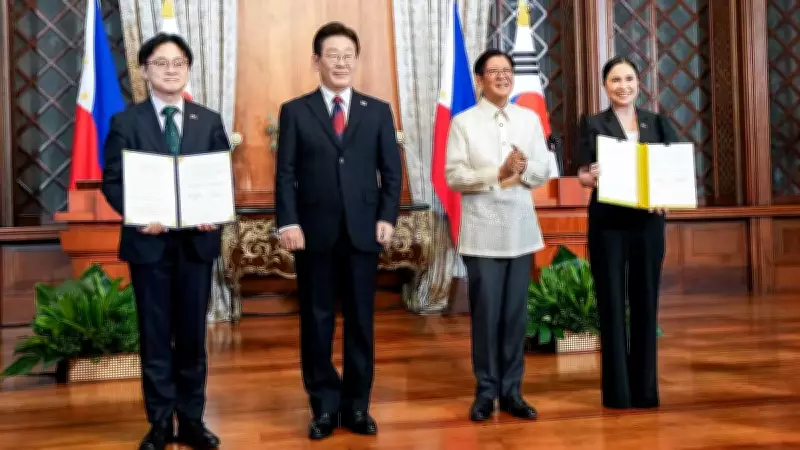
The Philippines and the Republic of Korea have significantly elevated their economic partnership through the signing of an enhanced Memorandum of Understanding. This upgraded agreement strengthens cooperation in trade, investment, and economic collaboration during a period of rapid global economic transformation.
Establishing a More Robust Cooperation Framework
The new MOU between the Philippine Department of Trade and Industry and Korea's Ministry of Trade, Industry and Resources establishes a more robust and action-oriented Joint Commission on Trade, Investment, and Economic Cooperation. This high-level platform is designed not only to expand bilateral trade and accelerate investments but also to complement both countries' industrial capabilities in strategic sectors that will shape future growth.
Witnessed during the State Visit of ROK President Lee Jae Myung, the MOU signals both nations' commitment to transforming the agreement into measurable economic outcomes. The focus will be particularly on priority industries and sectors that drive industrial upgrading, innovation, and job generation.

Strategic Partnership Reinforcement
"This MOU reinforces the strategic character of our partnership with Korea," said Secretary Cristina Roque. "By institutionalizing a more responsive and forward-looking cooperation mechanism, we are ensuring that trade and investment remain central pillars of a resilient and future-ready Philippine economy."
Under the enhanced framework, both countries have agreed to expand cooperation across numerous focus sectors, including:
- Automotive industry
- Shipbuilding and marine equipment
- Semiconductors and electronics
- Electrical equipment manufacturing
- Mold and die production
- Critical raw materials
- Energy sector development
- Digital economy initiatives
These industries represent key pillars of the Philippines' industrial development strategy and align perfectly with Korea's global leadership in advanced manufacturing and technology-driven sectors.
Operational Enhancements and Implementation Mechanisms
The MOU introduces several operational enhancements designed to improve implementation mechanisms. A Vice-Ministerial or Undersecretary-level ad hoc consultative body will be created specifically to address issues faced by businesses and investors. This mechanism is expected to provide a more agile and practical channel for resolving bottlenecks and facilitating smoother trade and investment flows.
The agreement further strengthens and supports the implementation of the Philippines-Korea Free Trade Agreement, particularly its Economic and Technical Cooperation Chapter. This will help in identifying priority projects and activities that support industrial growth and development.
Complementing Existing Trade Agreements
Secretary Roque emphasized that the strengthened JCTIEC framework complements the Philippines-Korea Free Trade Agreement, which entered into force on December 31, 2024.
"The PH-ROK FTA provides expanded market access and tariff advantages," she explained. "This upgraded cooperation mechanism ensures we maximize those benefits by aligning industry priorities, resolving business concerns swiftly, and promoting higher-value investments."
The Philippines considers Korea one of its most important economic partners, consistently ranking among its top trade partners and sources of investment. Korean firms have played a significant role in:
- Infrastructure development projects
- Electronics manufacturing operations
- Shipbuilding industry contributions
- Energy project implementations
Forward-Looking Economic Partnership
"With Korea as a strategic partner, we are reinforcing supply chain resilience, encouraging technology transfer, and building industries that generate quality jobs for Filipinos," Secretary Roque added. "This MOU positions our economic partnership to be more forward-looking, more responsive, and more impactful."

The signing of the MOU reflects both nations' shared commitment to sustaining a dynamic, rules-based, and innovation-oriented economic partnership in the years ahead. This enhanced cooperation comes at a crucial time when both countries seek to navigate global economic shifts while strengthening their bilateral economic ties.