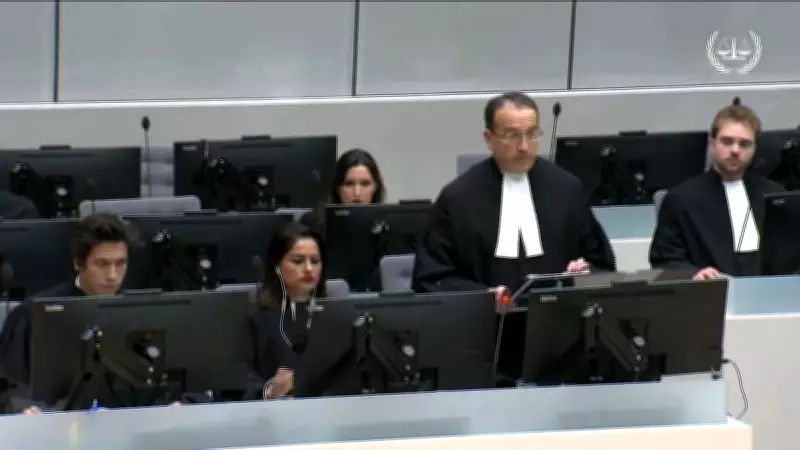
ICC Confirmation Hearing for Duterte Opens with Allegations of Crimes Against Humanity
In a significant development in international justice, the Pre-Trial Chamber I of the International Criminal Court (ICC) initiated the confirmation of charges hearing for former Philippine President Rodrigo Duterte on Monday, February 23, 2026. The proceedings focus on alleged crimes against humanity linked to his administration's aggressive campaign against illegal drugs, marking a critical step in the legal process that could lead to a full trial.
Charges and Legal Framework
Duterte faces multiple charges stemming from his tenure, which prosecutors argue constitute systematic attacks on civilians. The specific allegations include:
- Murders in or around Davao City from 2013 to 2016, involving 19 victims, among them three children.
- Murders of high-value targets from 2016 to 2017, with 14 victims identified.
- Murders and attempted murders during village clearance operations from 2016 to 2018, affecting 45 victims.
Presiding Judge Iulia Antoanella Motoc emphasized the preliminary nature of the hearing, stating that Duterte remains innocent until proven guilty. She clarified that the Chamber's role is not to determine guilt but to assess whether sufficient evidence exists to establish substantial grounds for the charges, ensuring a fair and impartial legal process.

Prosecution's Arguments and Evidence
ICC Deputy Prosecutor Mame Mandiaye Niang delivered a compelling opening statement, asserting that Duterte played a pivotal role in orchestrating widespread and systematic attacks against civilians. Niang argued that Duterte's contributions were essential to a common plan aimed at neutralizing alleged criminals in the Philippines, citing his public pronouncements made before and during his presidency.
Niang highlighted Duterte's statements, such as his intention to eradicate corruption, criminality, and drugs within three to six months, and his directive to hunt down and kill drug lords. The prosecution contends that Duterte authorized the murder of suspects, personally selected targets, and provided moral and financial support to perpetrators, including uniformed personnel. Niang referenced Duterte's promises of immunity, which allegedly emboldened direct perpetrators, as evidenced by witness statements, public records, signed documents, and official materials from the Philippine National Police.
Defense and Procedural Details
Duterte waived his right to appear at the hearing, with lead counsel Nicholas Kaufman representing him. Kaufman noted the presence of Filipino lawyers Salvador Medialdea, Martin Delgra III, Silvestre Bello III, Alfredo Lim, Caesar Dulay, and Salvador Panelo in support of the former president. The defense is expected to challenge the prosecution's evidence in subsequent phases of the hearing, focusing on legal technicalities and the interpretation of international law.
This hearing is a crucial milestone in the ICC's investigation into the Philippines' anti-drug campaign, which has drawn global scrutiny for its human rights implications. The outcome will determine whether the case proceeds to trial, potentially setting a precedent for accountability in similar international contexts. As the proceedings unfold, legal experts and human rights advocates are closely monitoring the developments, underscoring the broader implications for justice and governance worldwide.