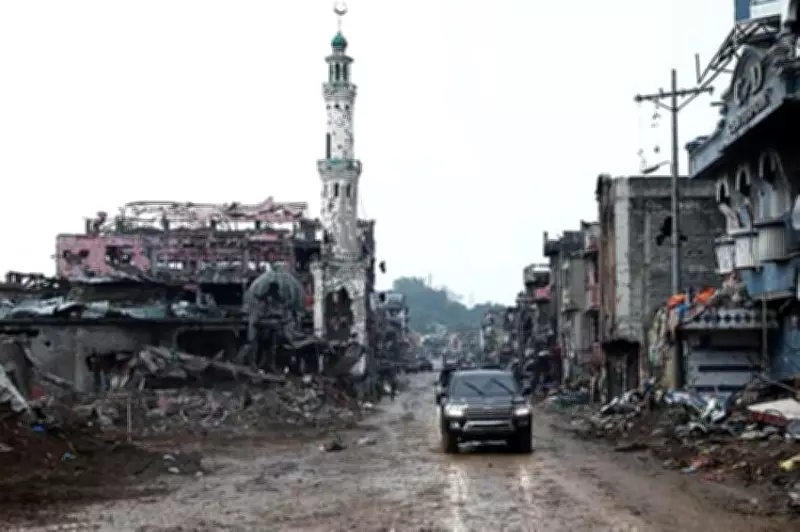
Internally Displaced Persons (IDPs) and families affected by the 2017 Marawi Siege continue to face uncertainty as the lingering impacts of prolonged displacement hinder their demands for justice and a safe, dignified return.
Ongoing Challenges for IDPs
The Initiatives for International Dialogue (IID), a Mindanao-based peacebuilding organization, along with its partner Sindaw, stated on May 24, 2026, that both the national government and the Bangsamoro regional government must urgently address the IDPs' calls. Key issues include slow and inadequate compensation claims, land conflicts and dispossession, permanent housing and eviction threats, expired shelter contracts, lack of water supply, education, livelihood opportunities, and health services. Trauma and mental health concerns, lack of consultation with affected communities—especially women—and growing fear of new or similar conflicts if core issues remain unresolved are also pressing.
Calls for Government Action
Gus Miclat, executive director of IID, said, “Nine years after the Marawi Siege, tens of thousands of IDPs remain languishing in squalid conditions. The government must recognize the critical need to listen to the IDPs in order to restore genuine peace and help Marawi get back on its feet. Ignoring them and their demands will only prolong their agony.”

IID noted that the Marawi Compensation Board (MCB), tasked with processing claims for damaged properties and loss of lives, may need to do more. IDPs continue to struggle with inadequate funding allocations, stringent documentary requirements, and delays in receiving full payouts.
“The dire state of the IDPs is further exacerbated by the lack of programmatic intervention and inaction of key relevant government agencies who must attend to their needs. Amid much publicized rehabilitation efforts in the city’s Most Affected Areas (MAA), the promise to rebuild the lives of the victims and survivors of the siege remain heavily unfulfilled,” Miclat added.
He emphasized, “Significant efforts must be made to hasten the process of resolving the fundamental problems confronting the IDPs in Marawi. Until today, there is an absence of a concrete response for families whose loved ones have been missing since the siege.”
Transitional Justice Approach Needed
IID said that displacement driven by armed conflict is a transitional justice issue that must deliberately respond to the justice claims of IDPs by addressing their most pressing needs and providing redress for victims and their families.
“There has to be a programmatic and proactive approach to address the roots of prolonged displacement and conflict in Marawi, centering on the interests, protection, and welfare of the IDPs. The government must factor in structural inequalities and ensure that human rights and the rule of law are observed at all times,” Miclat concluded.