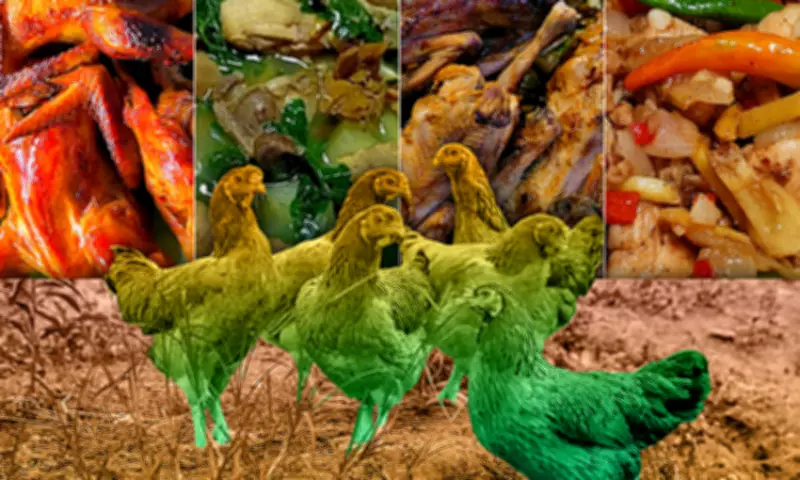
When you’re living in Metro Cebu, there is a type of chicken that is hard to get access to unless you actually look for it or go home to your province. That type of poultry is the bisayang manok, or native chicken.
Unlike commercial broiler chickens, the bisayang manok might look thin, but it packs a serious punch of flavor no matter how it’s cooked. It has a deeper, more earthy and gamey profile compared to regular supermarket poultry. Because these chickens roam freely and forage naturally, their meat is leaner, denser and more fibrous — which is exactly what makes the flavor so incredibly rich.
As the legendary food culturalist Doreen Fernandez observed in her book “Tikim: Essays on Philippine Food and Culture,” our culinary identity is anchored in a fundamental simplicity:

“Filipino cooking has, at base, a simplicity of method that comes from the earth wisdom. The agricultural cycle that we lived and live by, the product of that cycle, the time and pace it imposes and the lifestyle it develops, all dictate simplicity.”
The Biology Behind the Bite
Beyond the superior taste, there’s a biological reason why native chicken feels less heavy on the palate. Nutritional studies comparing indigenous free-range chickens to commercial broilers show that native birds have a significantly higher crude protein content and drastically lower abdominal fat.
Because their diet relies on natural foraging rather than synthetic, high-calorie commercial feeds, they don’t accumulate the same pockets of saturated fat. They also require far fewer chemical inputs and antibiotics, making the resulting dish a much cleaner, nutrient-dense source of protein.
Breaking the Monotony of the Metro
Out here in the city, fast food and quick-service meals dominate the daily routine. Everything is standardized. But the moment you get a taste of native chicken, it breaks that monotony. It reminds you of backyard setups, the sound of early mornings in the province and the slow-paced life that exists outside the concrete and traffic of the metro.
There is no rushing a dish made with bisayang manok. Because the meat is naturally leaner and firmer, it demands patience. It sits on the stove, simmering low and slow, letting the heat gradually break down the fibers until they’re tender enough to give just the right amount of chew. You can’t get that kind of texture from a quick-cooked supermarket bird.
This unhurried process gets right to the heart of what traditional Filipino food relies on: an uncomplicated, elementally raw approach to cooking.
Cooking manok bisaya honors that exact earth wisdom. It strips away the need for heavy, distracting techniques and artificial enhancements, proving that true flavor comes from a pure ingredient allowed to grow and cook at its own pace. It’s a slow burn that fills the entire kitchen with an unadorned, honest aroma that instantly signals comfort.
This commitment to simplicity is honored across Cebuano cuisine through a few definitive dishes, each letting the bird’s natural, robust profile dictate the flavor:
Regional Variations
Tinowang Manok Bisaya
The Cebuano version of tinola focuses entirely on broth purity. Lean native chicken is simmered slowly with ginger, lemongrass (lemba), onions and green papaya or chayote, then finished with fresh moringa (kamunggay) leaves. The slow simmer extracts an intensely savory marrow broth that stays perfectly light and grease-free.
Lechon Manok Bisaya
Far removed from standard food-stall rotisserie chicken, this version stuffs the bird to its limit with lemongrass, garlic, onions and black peppercorns before slow-roasting it over charcoal. Because the meat is naturally lean, the skin renders down tightly, forcing the heavy herbal aromatics directly into the dense muscle fibers.
Dumanjug Native Chicken Inasal
A southwestern coast specialty that rejects the sweet, orange baste of commercial inasal. Instead, the bird is split, skewered, heavily packed with lemongrass, garlic and scallions and marinated simply in pure coconut vinegar and sea salt. Charcoal-roasting seals in its intensely savory, smoke-kissed depth.

Cebuano Chicken Halang-Halang (Clear Broth)
The popular carenderia counterpoint to the rich coconut milk version. The chicken is finely chopped — bones included — and hard-sautéed with massive amounts of ginger, garlic and onions. It is simmered in minimal water until it reduces into a concentrated, fiery broth heavily spiked with crushed bird’s eye chili (sili wegit or kulikot).
The secret is the bone-in cut: No matter which way it’s prepared, authentic manok bisaya dishes almost always chop the chicken into small, bone-in pieces. This maximizes the surface area of the marrow exposed to the heat, ensuring that every ounce of that deep, earthy flavor is pulled directly into the soup or sauce.
A Culinary Anchor to Home
In a world of fast food, hyper-standardized flavors and industrial poultry designed to grow too fast and taste like too little, the native chicken stands as a stubborn, beautiful reminder of what food is supposed to taste like when it’s allowed to take its time.