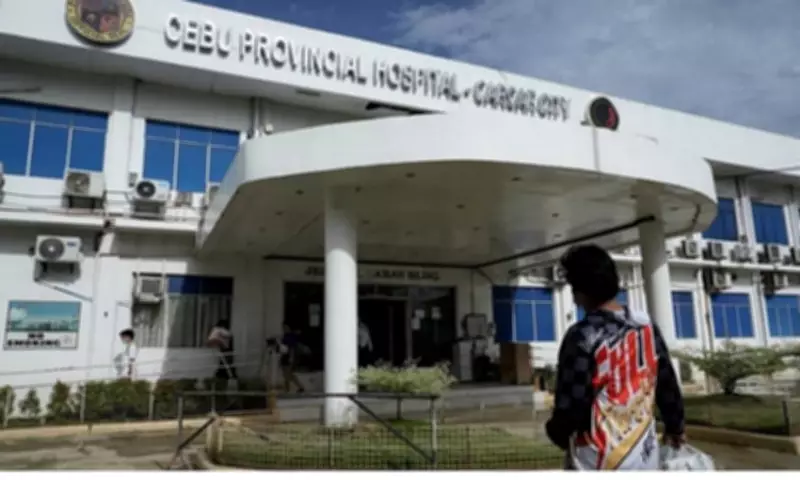
In a recent statement, a Cebu health official has clarified the circumstances surrounding the transfer of an accident victim from Cebu Provincial Hospital–Carcar City, emphasizing that the move adhered to established medical protocols. The incident, which occurred on January 29, 2026, involved a minor patient who required specialized care beyond the capabilities of the Level 1 facility.
Official Statement on Patient Care and Transfer
Elisse Nicole Catalan, the Capitol Piso Health Consultant, posted a detailed explanation on her Facebook page on Thursday. She confirmed that the patient, who was intoxicated and not wearing a helmet during a motor vehicle accident, arrived at CPH-Carcar around 2:30 a.m. and was initially unidentified. Catalan stressed that the hospital's SugBUCAS Emergency Room team provided immediate emergency and resuscitative care upon arrival, in line with the facility's mandate.
"Was the patient treated at CPH-Carcar? Yes. The patient received emergency and resuscitative care upon arrival, consistent with the hospital’s capacity and mandate. Initial stabilization and monitoring were provided while coordination for referral and transfer was initiated," Catalan stated in her post. She added that family members identified the patient approximately two hours later, facilitating further coordination.

Focus on Factual Information and System Strengthening
Catalan made it clear that her post aimed to provide factual and educational insights, not to assign blame or draw legal conclusions. She highlighted the provincial government's ongoing efforts to enhance healthcare systems, reduce congestion at apex hospitals, and improve inter-facility coordination. The goal, she noted, is to ensure that every patient receives timely, safe, and appropriate medical support across the region.
Understanding Hospital Levels and Referral Needs
Explaining why the transfer was necessary, Catalan pointed out that the patient's injuries demanded specialized services such as advanced imaging, intensive care, and neurosurgery—resources typically available only in higher-level hospitals. "When a patient’s medical needs exceed the services a facility can safely provide, referral to a higher-level institution is part of standard clinical practice," she elaborated.
For public reference, Catalan outlined the classification of hospitals in the Philippines:
- Infirmary — Offers basic care for minor and common cases.
- Level 1 — General hospital with emergency services, surgery, maternity care, and basic laboratory and X-ray facilities.
- Level 2 — Includes Level 1 services plus intensive care units and specialty departments.
- Level 3 — Tertiary or teaching hospitals with highly specialized services and major referral capacity.
She noted that CPH-Carcar is classified as a Level 1 hospital, whereas Vicente Sotto Memorial Medical Center (VSMMC) serves as a Level 3 apex hospital equipped with neurosurgical and trauma services.
Role of the DOH e-Referral System
Catalan cited the Department of Health Central Visayas e-Referral System as the key mechanism guiding patient transfers between hospitals. This system provides a structured process for tracking referrals, ensuring proper communication between facilities, and supporting accurate triage to match patients with the appropriate level of care. She mentioned that the e-Referral System is currently being benchmarked by other regions as a model for efficient healthcare coordination.
Factors Influencing Transfer Delays and Healthcare Realities
Addressing potential delays in patient transfers, Catalan explained that several factors come into play, including the patient's stability and bed availability at the receiving hospital. "A receiving hospital cannot give a bed it doesn’t have," she remarked, adding that some patients require further stabilization before transport due to the medical risks associated with transfers themselves.

Catalan acknowledged that despite continuous improvements in the healthcare system, serious outcomes can still occur, particularly in severe cases like vehicular accidents. She concluded by emphasizing that no healthcare system, regardless of its resources, can completely eliminate medical risks or mortality, underscoring the importance of robust protocols and public awareness.