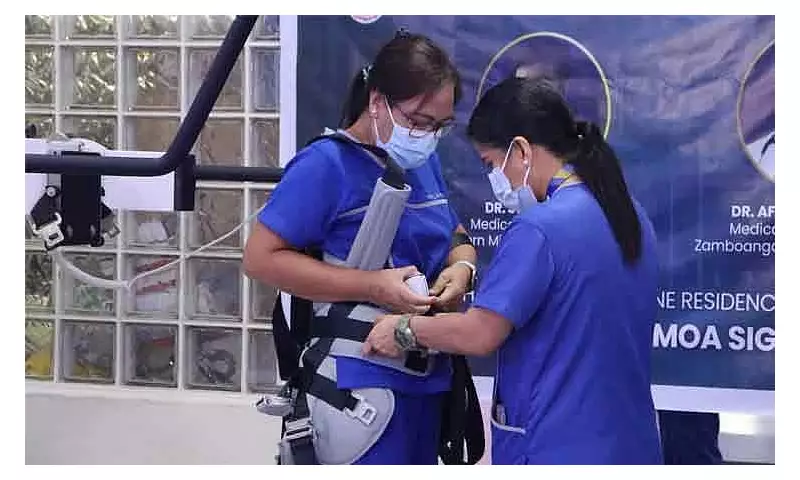
The Southern Philippines Medical Center (SPMC) in Davao City has officially opened a new era in regional healthcare with the launch of its Robotics Neurorehabilitation and Musculoskeletal Rehabilitation facility. The center, which began operations on Monday, July 21, 2025, falls under the hospital's Department of Physical and Rehabilitation Medicine (DPRM).
A Leap Forward in Surgical Precision
This initiative marks the first time robotic technology for both surgery and rehabilitation has been introduced at SPMC. The move represents a significant advancement, bringing cutting-edge medical procedures to Mindanao that were previously accessible only in government hospitals in Metro Manila. During the recent Kapehan sa Dabaw Media Forum, Dr. Rolley Rey P. Lobo, Head of SPMC’s Integrated Operating Room Management Unit, provided key updates.
Dr. Lobo reported that since the program's inception in October, a total of 23 patients have successfully undergone robotic surgery. He explained that the technology offers surgeons superior dexterity and high-definition 3D visualization. A critical feature is the motion-scaling technology, which filters out natural hand tremors, allowing for exceptional precision in delicate areas like the cervical, thoracic, and abdominal regions.

SPMC now stands as the only government hospital outside Metro Manila equipped with this robotic surgical system, joining the Philippine General Hospital (PGH) in Manila as the sole public institutions offering the service. To support this program, SPMC currently has one certified robotic surgeon, with two more completing their final training in Singapore. Ambitiously, over 30 additional surgeons are in line for certification, underscoring the hospital's commitment to expanding its robotic capabilities.
Making Advanced Care Accessible
While acknowledging that robotic procedures involve higher costs, Dr. Lobo emphasized that SPMC is actively working to ensure patients can still benefit from policies like zero-balance billing. The advantages for patients are substantial, including:
- Reduced post-operative pain
- Minimized blood loss during surgery
- Faster recovery times
- Lower likelihood of a procedure converting to open surgery
Patients are presented with all available options—open, laparoscopic, or robotic—and make the final decision on their preferred approach. In a significant move for affordability, while private hospitals may charge around P500,000 for such surgery, SPMC offers it at approximately P250,000. The robotic system itself represents a major investment, costing over P300 million, and is versatile enough for procedures involving the gallbladder, pancreas, and liver.
Robotics in Recovery: Aiding Stroke and Sports Rehabilitation
The innovation at SPMC extends beyond the operating room into the critical phase of recovery. Dr. Matthew Rex Madayag, Consultant and Fellow of the Philippine Academy of Rehabilitation Medicine, highlighted the application of robotics in rehabilitation.
Robotic devices are now actively assisting stroke patients and individuals recovering from sports injuries. Technologies like the Robotic Force (R-Force) provide support for lower body movement, enabling patients to walk, run, and train with significantly reduced pain and discomfort. Another device, the Robotic Touch, is used in occupational therapy to stimulate neuroplasticity, which is especially beneficial for patients experiencing slower recovery in their upper extremities.
The effectiveness of this approach is already evident. Dr. Madayag noted that many patients prefer robotic rehabilitation, with some even transferring from private hospitals to SPMC specifically to access this advanced technology.
The launch of this dual-purpose robotic facility at SPMC is a transformative development for healthcare in Southern Philippines. It not only elevates the standard of surgical care available in Mindanao but also ensures that recovery is supported by equally advanced technology, making comprehensive, cutting-edge treatment more accessible to Filipinos outside the national capital region.