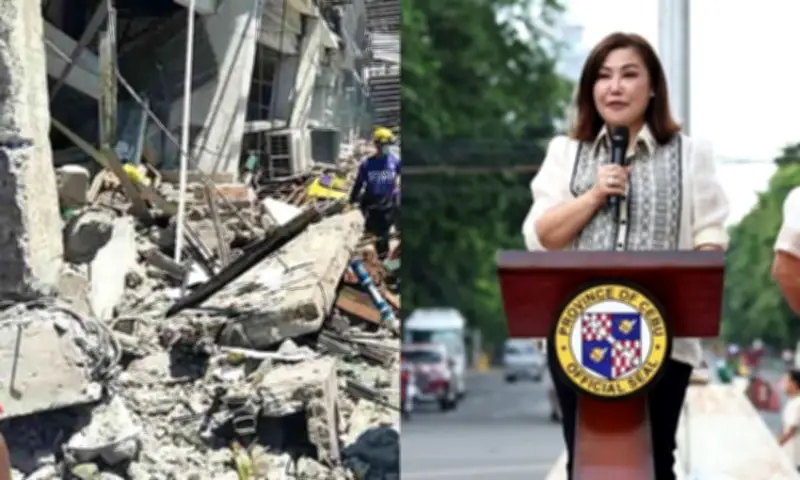
The Cebu Provincial Government is preparing to provide psychosocial support to families affected by the recent earthquake in Mindanao. Governor Pamela Baricuatro said the province is committed to helping residents recover from the disaster’s emotional and psychological impact.
Baricuatro noted that the initiative reciprocates the assistance Cebu received from General Santos City following a major earthquake in September 2025.
“We should also help them in times of need because we, too, were helped. We are reciprocating also to our neighbors,” the governor said.

Provincial Disaster Risk Reduction and Management Office (PDRRMO) head Dennis Pastor said an assessment team will first evaluate conditions in the affected areas before any assistance mission is conducted.
Pastor stressed that the mission must ensure the safety and security of all personnel, including Gov. Baricuatro, to prevent disruptions to the planned assistance.
According to Pastor, the assessment team will evaluate ground conditions to determine whether response operations can be conducted safely and effectively. The evaluation will also identify the immediate needs of affected communities to ensure the provincial government provides the most appropriate assistance.
Meanwhile, the Provincial Social Welfare and Development Office (PSWDO) and the Provincial Health Office (PHO) remain on standby to provide psychosocial interventions or medical augmentation upon the request of local authorities.
Mental health and psychosocial support is a key component of disaster response, alongside food, water, and medical assistance. According to the World Health Organization (WHO), emergencies and natural disasters cause significant psychological distress that can affect survivors in the short and long term, making mental health support essential to recovery efforts.
Children are among the most vulnerable after disasters. The United Nations Children’s Fund (UNICEF) notes that exposure to emergencies can leave children struggling with fear, anxiety, and emotional trauma, underscoring the need for psychosocial interventions to help restore a sense of safety, stability, and normalcy.
Experts emphasize that psychosocial support helps survivors cope with grief, stress, and uncertainty while strengthening resilience during recovery. The WHO estimates that a significant portion of people affected by major emergencies may develop mild to moderate mental health conditions following a disaster.
Provincial officials said the schedule for the psychosocial support activities and other forms of assistance will be finalized once the assessment team completes its evaluation and the affected areas are deemed safe for deployment.