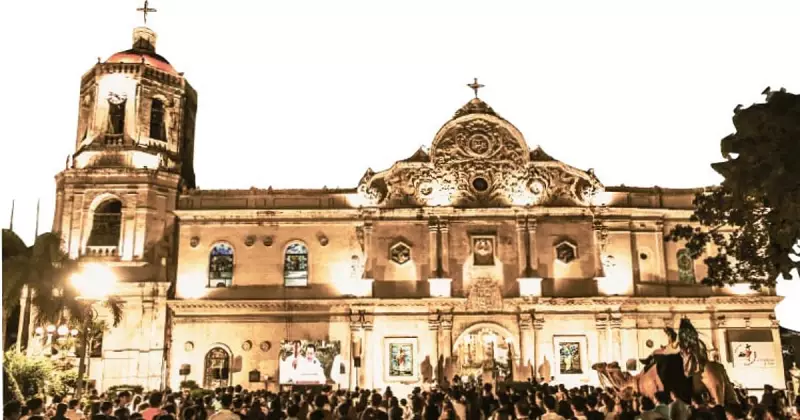
The vibrant faith of the Filipino people shines brightly during the nine-day novena leading to Christmas, a cherished tradition that turns early mornings and evenings into profound communal prayer. This devotion, widely known as Simbang Gabi, stands as a defining spiritual and cultural practice passed down through generations. However, the Archdiocese of Cebu has issued an important clarification: the terms "Simbang Gabi" and "Misa de Gallo," often used interchangeably, are not liturgically identical.
Understanding Simbang Gabi: A Time of Advent Preparation
Official guidance from the Cebu Commission on Worship, detailed in materials titled "Instructions on the proper observance of Simbang Gabi and Misa de Gallo in the Archdiocese of Cebu," draws from a circular letter to provide clarity. Simbang Gabi is celebrated in the evening from December 15 to 23, anticipating the novena days from December 16 to 24. Liturgically, it remains firmly within the season of Advent—a period of waiting and preparation, not yet celebration.
This distinction is visibly marked by the use of violet vestments, symbolizing penance, hope, and anticipation. The Mass follows the Roman Missal or Cebuano Sacramentary with the day's proper readings. To preserve the spirit of Advent, the Gloria is omitted, and the use of Christmas carols or the Misa Pastorella is explicitly discouraged. The commission emphasizes that these norms protect the theological character of Advent as a time of longing, not arrival.

The Joyful Proclamation of Misa de Gallo
In contrast, Misa de Gallo refers specifically to the dawn Masses celebrated from December 16 to 24. Its name originates from the Spanish word "gallo" (rooster), denoting the early hour. This schedule historically accommodated farmers and laborers who could attend before their workday began.
The liturgy for Misa de Gallo signals a shift in tone. White vestments are worn, representing joy and solemnity. The Gloria is sung, and the use of the Misa Pastorella and Christmas carols is permitted when appropriate, marking the transition from preparation to proclamation. The approved text is the Misa de Gallo Cebuano Revised Edition 2024. When a dawn Mass falls on a Sunday, it fully adopts the Sunday liturgy, including the Creed.
Why These Liturgical Details Matter
While differences in vestment color or song choice may seem technical, the Cebu Commission on Worship stresses that these guidelines are about fidelity and meaningful celebration, not mere restriction. As an advisory body to the Archbishop, the commission ensures liturgy in the archdiocese is conducted correctly and in communion with the universal Church.
In essence, the key difference is temporal and liturgical: Misa de Gallo denotes the traditional dawn celebrations, while Simbang Gabi refers to the evening observances. Both form the same nine-day spiritual preparation for Christmas but are observed with distinct norms that deepen the faithful's journey from hopeful waiting to joyful celebration.