Central Visayas RDC Greenlights 2027 Budget Amid Infrastructure and Employment Challenges
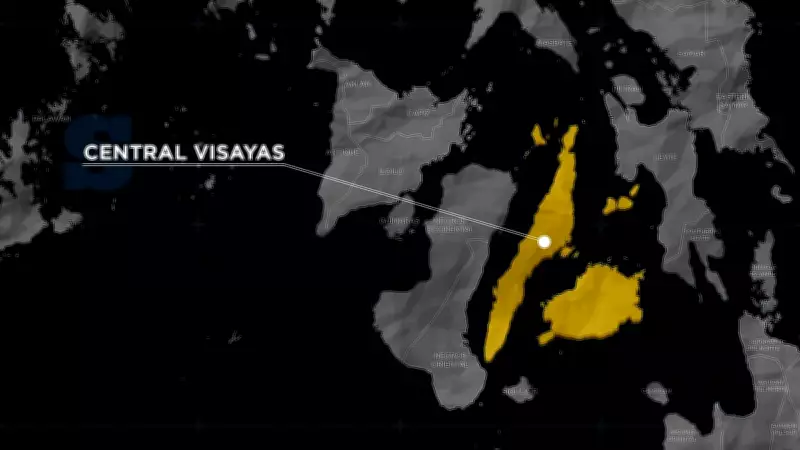
The Regional Development Council (RDC) 7 has given its stamp of approval to budget proposals for 40 agencies and endorsed critical regional initiatives during its first quarter full council meeting for 2026, held on March 30 in Mandaue City. Chaired by Cebu Governor Pamela Baricuatro, the session highlighted a significant budget allocation disparity, with only P19.9 billion—approximately one-fifth of the region's proposed P97.21 billion budget for 2027—earmarked for infrastructure. This figure falls notably below the P69.67 billion allocated for social services.
Budget Breakdown and Submission Process
According to data from the Department of Economy, Planning and Development (DepDev) 7, the proposed budget is structured with social development claiming the largest share at P69.67 billion. Infrastructure follows at P19.9 billion, trailed by economic development at P4.78 billion, development administration at P1.61 billion, and environment and natural resources at P1.25 billion. The budget aligns with Executive Order 82, series of 2025, and National Budget Memorandum 156, and will be submitted to national agencies for consolidation into the 2027 General Appropriations Act.
Employment Concerns Linked to Infrastructure Spending
During the meeting, Department of Labor and Employment 7 Director Roy Buenafe drew a direct connection between employment trends and infrastructure spending, citing slow project implementation as a key factor in job losses. "Last quarter of 2025, the employment rate was very low," Buenafe stated. "Unemployment and underemployment increased. It's because our implementation of infrastructure projects decreased. It has a huge impact on employment." He emphasized the urgent need to accelerate infrastructure rollout to boost job generation, prompting Governor Baricuatro to request Department of Public Works and Highways 7 Director Simon Arias to fast-track projects in the region.

Rising Demand and Priority Projects
The smaller infrastructure allocation comes as Central Visayas faces mounting pressure to address transport congestion, enhance inter-island connectivity, and expedite mobility projects, including mass transport systems and port developments. In response, the council endorsed priority projects for national approval, such as the Lapu-Lapu City Coastal Road Project and the relocation of the Regional Technical and Vocational Education and Training Innovation Center. Additionally, the RDC 7 approved the creation of a Regional Public-Private Partnership Committee to accelerate locally initiated projects and backed the establishment of a Visayas regional office for the Department of Transportation to strengthen regional planning.
Inflationary Risks and Geopolitical Tensions
DepDev 7 flagged rising inflation as a significant risk to infrastructure development, with Senior Economic Specialist Raffy Dave Boyles noting that Central Visayas recorded the highest inflation rate among all regions for two consecutive months—six percent in February and 5.6 percent in January. Boyles attributed this to escalating fuel prices driving up construction costs for materials like cement, steel, and asphalt. To mitigate impacts, variation orders will be applied to contracts, with projections indicating diesel prices could peak at P120.26 per liter in April before easing to P97.73 in May.
Boyles also warned that geopolitical tensions involving the US, Israel, and Iran could dampen investor confidence, leading to a wait-and-see approach among foreign investors and potential pauses in capital expenditures by local investors if interest rates rise. This could result in cost-cutting measures, such as reduced working hours and hiring freezes, exacerbating the region's unemployment rate, which stood at 5.8 percent as of January 2026. Higher operational costs may further slow manufacturing output and disrupt supply chains, with some shipping companies already imposing hikes and reducing vessel trips.

Policy Reforms and Collaborative Efforts
The RDC endorsed several policy reforms aimed at strengthening governance, including support for House Bill 4018, which proposes an equitable regional share in the national budget. The council also called for the passage of the Cadena Act, the creation of an Independent People's Commission, and the institutionalization of local housing boards. To formalize collaboration, a memorandum of agreement was signed for the Regional Inter-Agency Committee under the Philippine Community Resilience Project of Social Welfare and Development 7. The RDC 7 emphasized that aligning regional priorities will be critical to securing National Government funding and sustaining development in Central Visayas.