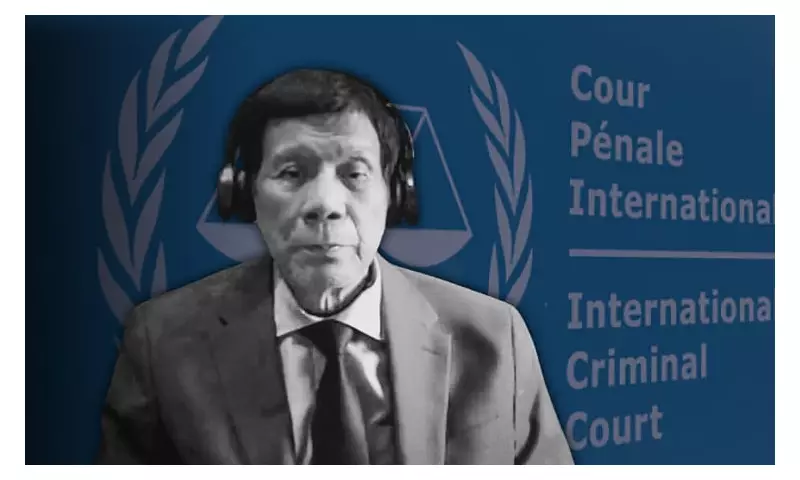
The legal team representing former President Rodrigo Duterte has launched a strong condemnation against the Department of Justice's proposed method for enforcing potential International Criminal Court arrest warrants, labeling it as a dangerous constitutional violation that threatens national sovereignty.
Constitutional Violation Alleged
In a statement released on November 12, 2025, lawyer Salvador Paolo A. Panelo Jr., who serves as counsel for Duterte's daughter Veronica in habeas corpus petitions filed for the former president, sharply criticized what he described as the DOJ's "quicker surrender option" for turning over Filipinos to the ICC.
Panelo emphasized that "there is no such animal as an 'option' to 'surrender' Filipinos to the ICC without prior authority from a Philippine court." He stressed that the DOJ's concept of an "executive mode" of surrender directly contradicts constitutional protections.

Legal Basis for Opposition
Citing Article III, Section 2 of the 1987 Constitution, Panelo clarified that only Philippine judges can issue valid arrest warrants after establishing probable cause. "The DOJ has no authority to bypass the judiciary and choose the so-called 'executive mode' of surrender to detain and deliver any person subject to an ICC warrant of arrest," he asserted.
The legal expert further explained that Republic Act 9851, which covers war crimes and crimes against humanity, must be interpreted alongside constitutional requirements for court approval before any individual can be transferred to foreign tribunals.
Jurisdiction Questions Raised
Panelo added that ICC warrants or decisions cannot take effect in the Philippines without confirmation from local courts, referencing Rule 39, Section 48 of the Rules of Court. He noted that even under the Rome Statute, arrested individuals must first appear before judicial authorities in the custodial country to verify arrest legality.
He presented a crucial argument: since the Philippines withdrew from the Rome Statute on March 17, 2019, the government no longer possesses any legal authority to surrender individuals to the ICC. "Whatever 'option' may have been available expired upon our withdrawal," Panelo declared.
Supreme Court Intervention Sought
The Duterte legal team announced plans to file an urgent motion before the Supreme Court seeking an immediate ruling on consolidated habeas corpus petitions. Panelo stated this action aims to "provide the necessary judicial guidance to put a stop to this administration's shameless constitutional violations for the sake of political gain" and secure Duterte's "long overdue repatriation."
He accused the DOJ of "flouting constitutional protections" and "undermining national sovereignty" through its proposed cooperation with the international court.
Health Concerns and ICC Proceedings
While legal debates continue in Manila, the ICC's Pre-Trial Chamber has shifted attention to Duterte's health condition. In September 2025, the court appointed neurologists, psychiatrists, and neuropsychologists to assess whether the former president is medically fit to stand trial.
Duterte's legal team has challenged two of the appointed experts, questioning their impartiality. Meanwhile, victims' representatives have supported including independent specialists to ensure procedural fairness.
Court documents reveal that Duterte's lawyers have cited cognitive decline affecting his memory and reasoning capabilities as grounds to defer legal proceedings. The ICC has clarified that if found unfit, the case would be suspended rather than dismissed, allowing the crimes against humanity investigation to continue.
Broader Implications for Philippine Sovereignty
The conflict between the DOJ and Duterte's legal representatives highlights deeper tensions regarding the Philippines' cooperation with international justice mechanisms. While Duterte's lawyers maintain that surrendering citizens to foreign courts without judicial review violates constitutional principles, the DOJ's position may reflect the administration's commitment to global accountability standards.

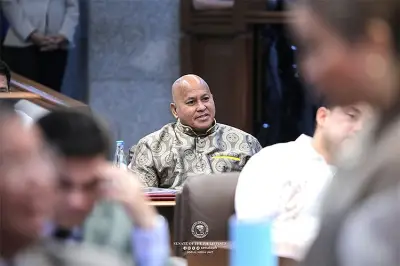
This legal confrontation occurs alongside renewed speculation about potential ICC arrest warrants against Senator Ronald "Bato" dela Rosa, a key architect of Duterte's controversial anti-drug campaign now under international scrutiny.