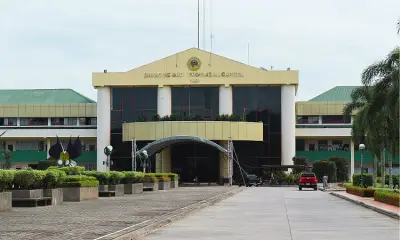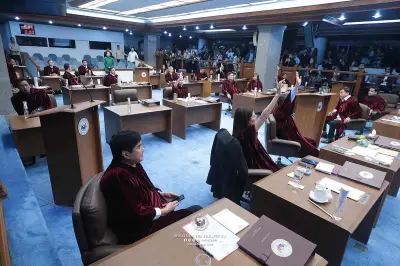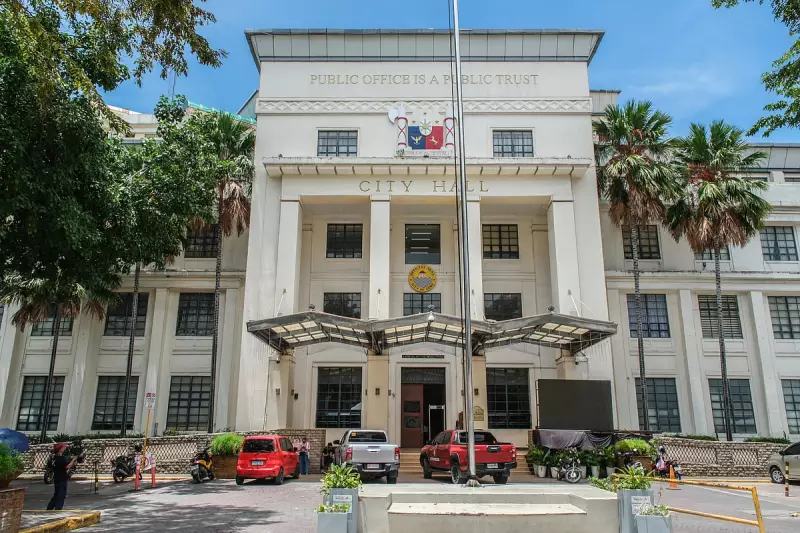
Eight former Cebu City government officials and three private individuals now confront imminent arrest after the Office of the Ombudsman-Visayas filed serious corruption charges against them at the Sandiganbayan anti-graft court.
Charges Filed Against Former Officials
The Ombudsman-Visayas officially lodged graft and malversation of public funds charges before the Sandiganbayan on November 24, 2025. This legal action received approval from then-Acting Ombudsman Dante Vargas on October 6, 2025, setting the stage for potential arrests.
Among the accused former officials are former city administrator Floro Casas Jr., city accountant Jerome Ornopio, acting city treasurer Mare Vae Reyes, and several Department of Public Services (DPS) personnel including John Jigo Dacua, Grace Luardo-Silva, Allen Ceballos, Romelito Datan, and Mark Ugbinar.

The Ombudsman had previously ordered the dismissal of all eight officials and employees in a resolution dated March 14, 2024. Private individuals named in the case include Jayra Ruiz-Javier, the authorized managing officer of Docast/JJ & J Construction, operations manager John David Javier, and encoder Erika Quino.
Nature of the Alleged Corruption Scheme
The case centers on two serious charges that highlight the gravity of the alleged financial misconduct. The first charge involves violation of Republic Act 3019, commonly known as the Anti-Graft and Corrupt Practices Act. This bailable offense carries a recommended bail of P90,000 and accuses the officials of providing unwarranted benefits to private contractors, thereby causing significant injury to Cebu City government.
The second and more severe charge is malversation of public funds under the Revised Penal Code. This non-bailable offense alleges that the accused permitted the contractor to overcharge the city by an astonishing P239,728,280.62 through manipulated, faulty, or incorrect billing statements.
How the Alleged Overpayment Occurred
According to investigators, the scheme began on February 17, 2021, and involved a simple yet devastating manipulation of billing rates. While the contract stipulated a rate of P600 per ton for barangay garbage disposal services, the city was allegedly billed at P1,800 per ton – a threefold increase that went undetected or unchallenged by responsible officials.
The Ombudsman's investigation revealed what appears to be a catastrophic failure in the city's financial oversight system. Officials tasked with verifying, reviewing, and monitoring billing statements allegedly neglected their fundamental duties, allowing the overbilling to continue unchecked.
The case specifically charges the eight former officials under Section 3(e) of RA 3019, accusing them of conspiring through manifest partiality, evident bad faith, or gross inexcusable negligence to grant unwarranted benefits to the contractors.
Broader Implications and Lessons
The massive alleged overpayment of nearly P240 million represents funds that could have supported essential public services including schools, hospitals, infrastructure projects, and disaster relief efforts. This case underscores how institutional complacency in public procurement processes can be exploited, resulting in substantial financial losses.
The Ombudsman found sufficient evidence to establish probable cause, stating investigators had uncovered a well-founded belief that crimes were committed and the accused are probably guilty. The alleged conspiracy involved three key failures: improper verification of billing statements, failure to cross-check submitted bills, and inclusion of the inflated rate in official billings.
This case serves as a stark warning to local government units across the Philippines about the critical importance of robust financial monitoring, accountability mechanisms, and automated oversight systems to prevent similar losses in the future.
The imminent issuance of arrest warrants means the accused must surrender to the court and post bail where applicable before facing arraignment. The case will then proceed to trial, where the Ombudsman's evidence of billing discrepancies and alleged falsified documents must prove criminal conspiracy beyond reasonable doubt.