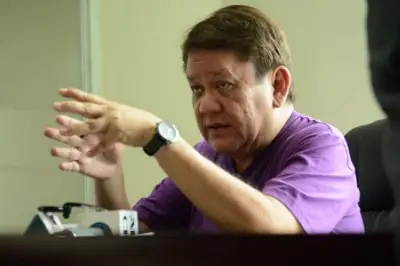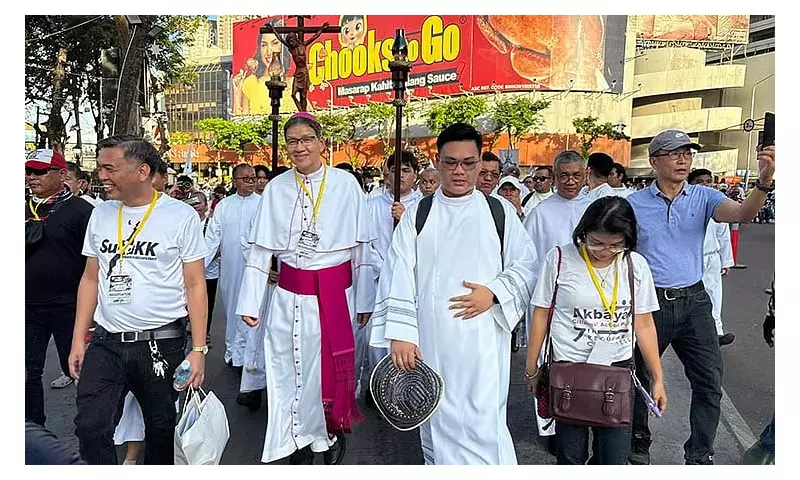
History often presents us with tantalizing "what if" scenarios. In the Philippines, one of the most powerful echoes from the past is the bold, megaphone-wielding leadership of the late Cardinal Jaime Sin during the 1986 People Power Revolution. His direct calls against a dictator helped mobilize a nation and change history.
A Different Kind of Leader Emerges in Cebu
Now, in 2025, a new figure in the Philippine Church has prompted quiet speculation among Cebuanos. Many have wondered if Archbishop Alberto "Abet" Uy of Cebu could become a modern-day counterpart to Cardinal Sin. The potential seemed evident: a leader of courage, principle, and charisma, standing in a pulpit of significant influence capable of making the powerful reconsider their actions.
However, the anticipated script did not play out. While Cardinal Sin famously called out a dictator by name, Archbishop Uy has taken a markedly different approach. He has consistently and forcefully condemned corrupt deeds and systemic injustice, but he has deliberately refrained from publicly naming the individuals responsible. This strategic choice has left many observers in Cebu and beyond pondering his methods.

Principle Over Personality: A Strategy for Modern Times
The reason for Archbishop Uy's method lies in the complex nature of contemporary corruption. Unlike the more monolithic power structures of the past, modern graft is often slippery and decentralized. It hides within vast institutions, flows through layered bureaucracies, and can even manifest in viral social media campaigns.
In this environment, publicly naming names can quickly backfire, potentially painting the Church as partisan or more interested in political drama than spiritual doctrine. Archbishop Uy's tactic is to attack the sin, not the sinner in the public square. This allows him to uphold moral accountability with what some describe as surgical precision, focusing on the underlying principle rather than engaging in personality-driven conflicts.
This is not an act of cowardice but one of calculated strategy. Leadership in the 21st century, particularly moral leadership, may rely less on public confrontation and more on sustaining long-term influence. The goal is to shape conscience, encourage dialogue, and inspire concrete action without reducing complex issues to social media hashtags or creating divisions among the faithful.
Steadfast Reform Without Theatrics
So, will Archbishop Abet Uy lead a dramatic, tank-facing revolution like the one seen in 1986? The answer is almost certainly no. He is not that kind of revolutionary figure. However, does he champion reform? Absolutely.
His path is one of quiet, clever, and persistent advocacy for change. He operates with a steadfast moral clarity, choosing to confront corruption without the theatrics that can sometimes overshadow the message. He proves that courage does not always require a shout; sometimes, it is communicated through subtlety, unwavering principle, and a knowing glance that conveys, "I see what is happening."
Looking ahead, the Philippines can expect this Boholano prelate to continue providing principled leadership. He represents a Church that engages with societal ills directly but thoughtfully. History may not have handed Archbishop Abet Uy the same megaphone used by Cardinal Sin, but perhaps he never needed it. Some heroes build a better world not with shouts that echo in plazas, but with the quiet, cunning courage that changes hearts and minds from within.