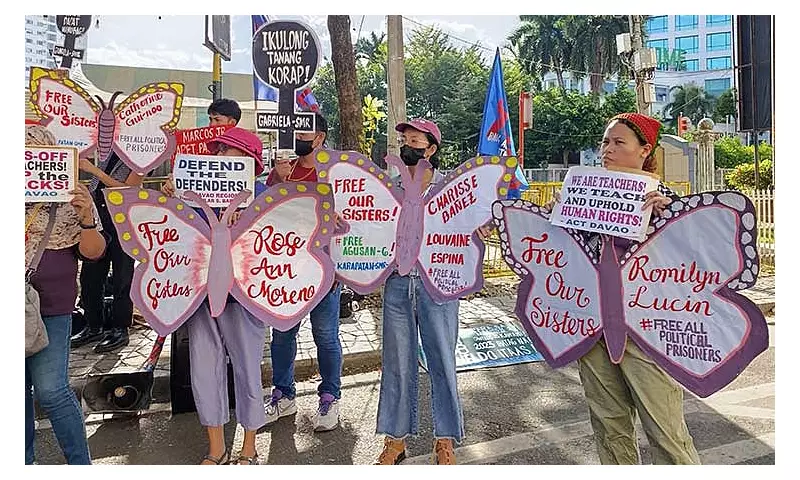
In a powerful demonstration marking the International Day for the Elimination of Violence Against Women, hundreds of women activists and their supporters gathered at Freedom Park in Davao Region on Tuesday, November 26, demanding government accountability for alleged irregularities in the country's flood control infrastructure projects.
Noise Barrage Against Systemic Corruption
The protest, organized by Gabriela–Southern Mindanao, featured a dramatic noise barrage where participants banged pots, pans, and blew whistles to symbolize their frustration with what they described as systemic corruption in the Philippines. Protesters carried placards with the powerful message: "Kababayen-an, Maghiusa; Bungkagon ang Dunot na Sistema" (Women, come together and overthrow the corrupt system).
At the heart of their outrage is the P118.5 billion in flood control funds that activists claim have been mishandled through anomalous projects. This substantial amount, intended to protect communities from flooding, has instead become a source of public anger and distrust.

Women Bear the Brunt of Corruption
Rose Hayahay, secretary-general of Gabriela-SMR, articulated the dual burden facing women across Mindanao. "Women across Mindanao are tired of being flooded not just by rising waters but also by debt," she declared. Hayahay emphasized that confronting multiple calamities alongside rising prices of basic goods constitutes another form of violence against women, particularly those living in poverty.
"While they ignore the demands for a living wage of P1,200, those in power are pocketing the budgets meant to protect us! We have a right to be angry and demand accountability," Hayahay stated during the rally.
Corruption as Gender-Based Violence
Allyssa Ancheta, chairperson of Gabriela Youth Davao, framed the issue in stark terms, describing how women face compounded oppression amid what she characterized as "rampant corruption" throughout the country. She made a compelling connection between corruption and gender-based violence, stating that the diversion of funds meant for essential social services directly harms women.
"When resources for health, education, housing, and livelihood are siphoned off, women are denied their rights and essential support," Ancheta explained. "This form of violence stems from government neglect, greed, and the prioritization of profit and power over the welfare of women."
The participation of indigenous women added another dimension to the protest. Kat Dalon, vice chairperson of the Sabokahan Women's Indigenous Group, declared that indigenous women refuse to remain passive victims. "As members of the IP community, we will continue to fight for our land, livelihoods, and security," she asserted.
Dalon concluded with a powerful warning to government officials: "We will be loud until our cries are heard! Punish the corrupt!" She expressed hope that their demonstration would inspire similar actions across the Philippines and send a clear message to bureaucrats that public anger over corruption continues to grow.