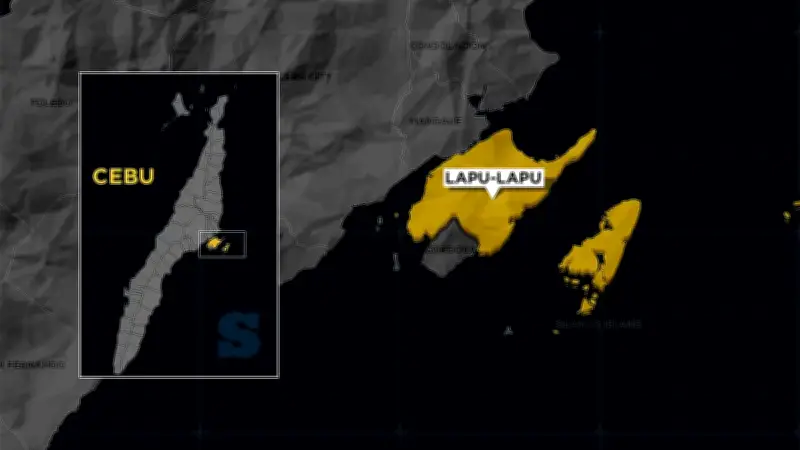
Lapu-Lapu City Regional Trial Court Judge Nelson Leyco has called for a review of evidence rules in corruption cases, stating that current standards may impede accountability for the misuse of public funds. In a resolution for the P96.5-million Davao Occidental flood control project case, Leyco granted bail to Cezarah Discaya and Czar Ryan Ubungen while denying bail to eight other co-accused.
Bail Ruling and Attached Reflections
Leyco allowed Discaya to post P1 million bail and Department of Public Works and Highways Davao Occidental finance officer Ubungen to post P300,000 bail. The judge attached a two-page writing titled “Reflections Beyond the Case: A Humble Plea for Re-Examination” to the resolution. In it, he urged a rethinking of how corruption cases are proved, emphasizing that judges must apply existing law even when the result may be unpopular.
“If we genuinely aspire to make meaningful progress in the fight against corruption, perhaps it is time to entertain ideas that have long been regarded as beyond discussion,” Leyco wrote. “Thinking outside the box should not be mistaken for a willingness to abandon constitutional values. On the contrary, it is an invitation to critically examine whether our existing procedural framework continues to strike the appropriate balance between safeguarding individual liberties and ensuring genuine accountability. The law, after all, is not intended to be static.”

Court Limits and Judicial Duty
Leyco acknowledged that the ruling could be seen as a setback in the anti-corruption fight but stressed that judges are duty-bound to decide cases according to existing statutes and jurisprudence, regardless of personal views. “I am not unaware that this resolution may be viewed as a setback in the fight against corruption,” he said. “That lingering thought made it even more difficult to gather the resolve to issue what will most likely be an unpopular decision.”
Evidence Rules and Constitutional Presumption
According to Leyco, the current system places such a premium on the constitutional presumption of innocence that it has become an obstacle to accountability in certain instances, especially in cases involving corruption or misuse of public funds. He clarified that his observations were not meant to weaken the presumption of innocence, which he called a cornerstone of the criminal justice system, but to spark discussion on whether evidence rules properly balance rights of the accused with protection of public funds.
Leyco noted that the 1987 Constitution presumes innocence until proven guilty, and the requirement of proof beyond reasonable doubt is in the Rules of Court issued by the Supreme Court. He questioned whether that standard is constitutionally entrenched or subject to procedural rule-making authority, calling for scholarly and judicial review.
Difficulty in Prosecuting Complex Corruption
The judge pointed to the difficulty of prosecuting complex corruption cases, where beneficiaries often work through intermediaries, making it hard to establish criminal liability against alleged masterminds under existing standards. “Our current legal framework has existed for decades. It would be unrealistic to assume that unscrupulous individuals have not, over time, discovered ways to circumvent its safeguards,” Leyco said.
Call for Reform and Discussion
Leyco said he expected criticism over the resolution but hoped it would prompt wider discussion on legal reforms. “Perhaps that is precisely what is needed to spark meaningful discussion and serve as a catalyst for change,” he said. He stressed that questioning existing legal mechanisms should not be mistaken for abandoning constitutional protections, but rather as an invitation to examine whether present procedures strike the proper balance between individual liberties and public accountability.