Massive Government Corruption Exposed in the Philippines
Media outlets across the Philippines continue to expose and analyze widespread corruption involving senators and congressmen who have allegedly conspired with officials from the Department of Public Works and Highways for many years. The scale of this corruption dwarfs even the infamous Janet Napoles case, with billions of pesos in taxpayer money being systematically stolen through various schemes.
The Ghost Projects and Denials
Evidence reveals fully paid ghost projects that never existed, yet government prosecutors appear to be moving slowly against those involved. The situation echoes the 2017 headline "NAPOLES CAMP TO FILE 'PORK' RAPS VS 120 LAWMAKERS" where ultimately only Napoles was jailed while none of the 120 House of Representatives members faced indictment.
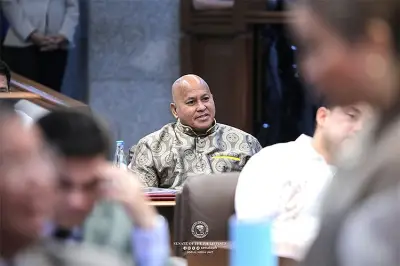
Current investigations involve several high-profile officials including Senators Jinggoy Estrada, Chiz Escudero, Bong Go, and Joel Villanueva, along with former House Speaker Martin Romualdez. All have entered what observers describe as "denial mode" regarding their involvement in corruption allegations.

Previous Corruption Cases Resurface
The case of former Undersecretary Lloyd Christopher Lao has returned to public attention. Lao, previously identified as an aide to Senator Bong Go, managed the procurement service at the Department of Budget and Management. Senate hearings revealed his central role in purchasing face masks and face shields during the pandemic, raising questions about the necessity of certain health measures implemented at that time.
Another significant case involves the Presidential Communication Office, where the Commission on Audit flagged unexplained hundreds of millions in appropriations. This became one of the most discussed topics on television and radio public affairs programs, though it was met with consistent denials from involved parties.
The public has grown increasingly frustrated with what appears to be a pattern of corruption followed by blanket denials. As one conversation between two friends illustrated: when caught in compromising situations, the strategy remains "Thou shall not admit" - refusing to confess regardless of evidence.