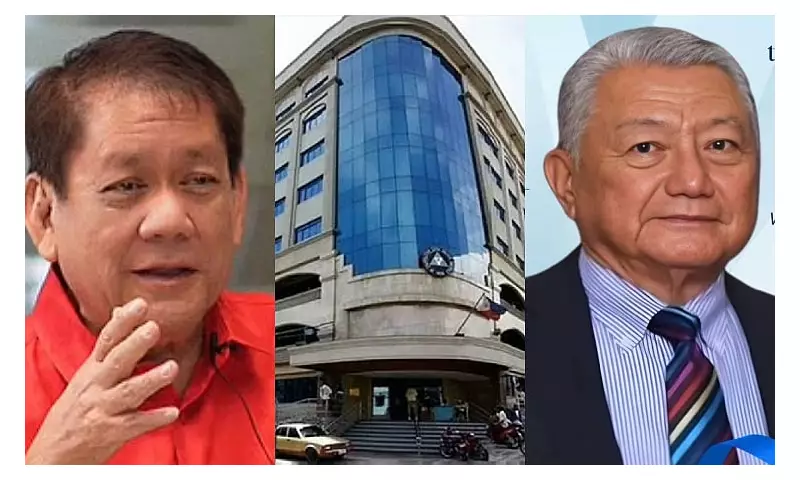
A newly appointed board member of the Metropolitan Cebu Water District (MCWD) has confirmed alarming financial issues within the utility, validating concerns raised by Cebu City Vice Mayor Tomas Osmeña last year. Ruben Almendras, representing the civic sector, disclosed that MCWD is suffering immense losses, a situation he alleges was obscured for nearly a decade.
Financial Hemorrhage and a History of Cover-Up
Ruben Almendras, appointed by Mayor Nestor Archival Sr. on December 9, 2025, brings a critical quorum to the long-deadlocked MCWD board. However, his focus has shifted to a graver issue: the water district's finances. In a statement on January 12, 2026, Almendras revealed that MCWD is "losing immensely and on negative cash flows." He stated that revenue is less than the cost of water, resulting in no gross margin.
More damning is his allegation that these heavy losses began nine years ago or even earlier. "They were massaging the financial reports," Almendras claimed, pointing to a potential cover-up. This directly contradicts MCWD's official August 2025 response to Vice Mayor Osmeña, which insisted the district operated under "normal conditions" with "no financial collapse."

Supply Shortfalls and Costly Contracts
While MCWD previously denied any "looming water shutdown," Almendras clarified that the core problem is an imbalance between supply and demand. "Water supply is inadequate to serve the demand," he stated. Instead of reducing non-revenue water and developing new sources, Almendras criticized MCWD's decision to contract 17 bulk-water suppliers at rates between P43 to P78 per cubic meter.
This has created a unsustainable financial model. The weighted average cost of this bulk water is nearly twice the average selling price of MCWD. To address this, Almendras has requested Mayor Archival and Vice Mayor Osmeña to personally follow up with the Local Water Utilities Administration (LWUA) to approve a rate increase.
Systemic Flaws and Calls for Legal Reform
The crisis highlights deeper structural problems. The Presidential Decree No. 198, which governs local water districts, was designed to shield them from political interference. However, it also limits oversight. The law restricts the MCWD board to policy-making, and LWUA can only intervene in management if a district defaults on a loan.
Almendras notes that while supervision is currently the least of MCWD's problems, the "glut of anomalies" cited by Vice Mayor Osmeña likely stem from a faulty system of supervision and control. He suggests that Cebu's congressional representatives should study amending the law to create a better regulatory framework for water districts, balancing efficiency with accountability.
Immediate steps are being taken, including operational controls and exploring a P500 million financing from LWUA and the Development Bank of the Philippines. The revelations confirm Vice Mayor Osmeña's August 2025 assessment of a "very serious situation" marked by mismanagement and a lack of transparency, now backed by insider testimony of a prolonged financial crisis.