NBI Confirms Sufficient Evidence to Prosecute Ghost Flood Control Projects in Cebu
The investigation into non-existent flood control projects in Cebu has reached a critical juncture, with the National Bureau of Investigation Central Visayas officially transferring its findings to the Central Office in Manila. This move marks a significant step toward holding accountable those responsible for these fraudulent infrastructure schemes.
Evidence Submitted for Final Evaluation
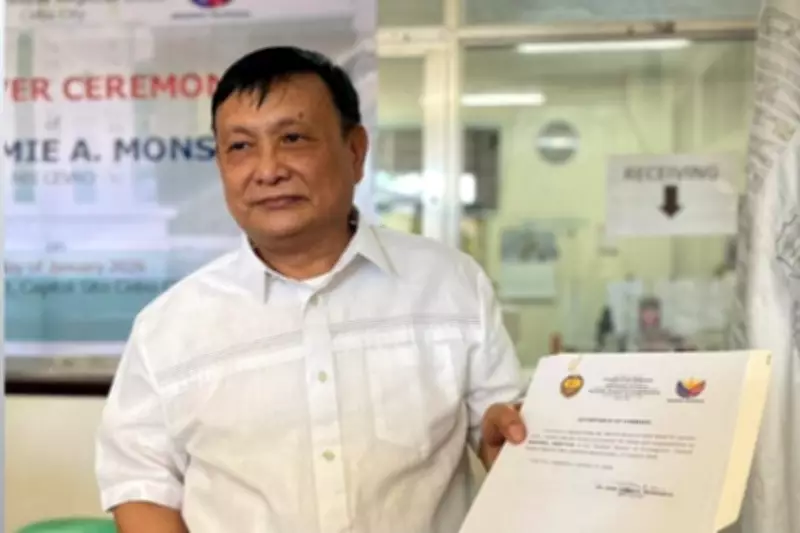
NBI-7 Regional Director Jose Ermie Monsanto confirmed on Wednesday, February 18, 2026, that the files detailing three "ghost" projects are now under review in Manila. These projects, which received funding but were never constructed, have been the focus of intense scrutiny since late 2025.
"As far as the NBI-7 is concerned, we have enough evidence, but it's up to the Central Office to evaluate," Monsanto stated. The investigation gained concrete confirmation through site visits on February 13, where investigators verified the complete absence of the promised infrastructure at undisclosed locations.

Ongoing Investigation Despite File Transfer
Director Monsanto emphasized that the transfer of files to Manila does not signal an end to local investigative efforts. "It does not mean we will stop our investigation. I am not satisfied with the evidence gathered so far, and I told my agents to gather more," he declared.
The NBI-7 team in Cebu is now intensifying its probe by:
- Summoning witnesses and representatives from various involved agencies
- Reviewing documentation for projects that were only partially completed
- Examining instances of substandard or poor-quality work that failed to provide adequate flood protection
Broader Context of Infrastructure Accountability
This investigation forms part of a larger nationwide audit ordered by President Ferdinand "Bongbong" Marcos Jr. in 2025, following severe flooding during Typhoon Tino that exposed numerous failed or non-existent flood control projects. The audit has revealed systemic issues in infrastructure development across the country.
Concurrently, the Department of Public Works and Highways (DPWH) under Secretary Vince Dizon has announced it will submit its own report to the Office of the Ombudsman regarding anomalous projects in Cebu. This dual-track approach represents a coordinated effort to address infrastructure corruption at multiple governmental levels.
Impact on Cebu Communities
For residents of Cebu, these ghost projects represent more than financial loss—they constitute a direct threat to public safety. When funds allocated for flood protection vanish without corresponding infrastructure, communities remain vulnerable to rising waters during monsoon seasons and typhoons.
The current investigation aims not only to prosecute those responsible but to establish mechanisms ensuring future tax revenues are actually expended on the infrastructure projects for which they were designated. This represents a crucial step toward restoring public trust in government infrastructure initiatives.