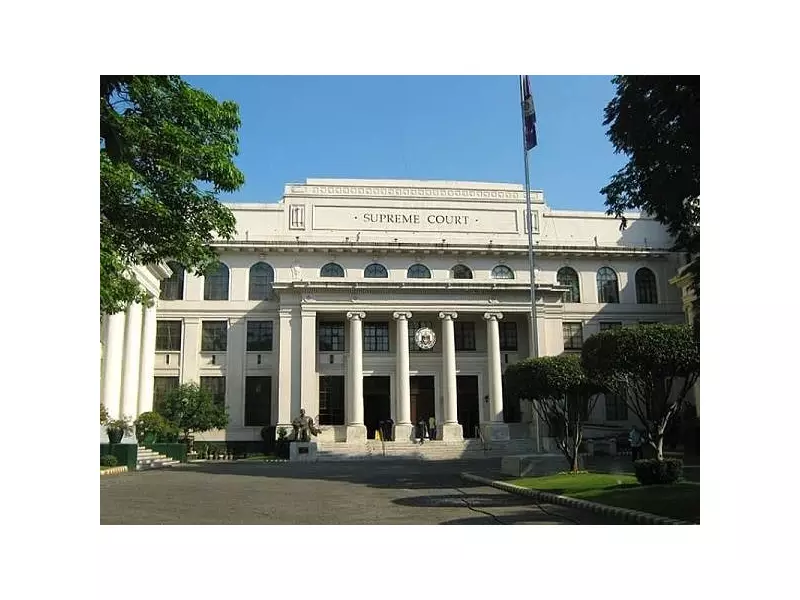
The Supreme Court of the Philippines has delivered a powerful ruling, affirming that wealth acquired by public officers which is grossly disproportionate to their lawful income is presumed ill-gotten and subject to forfeiture by the state.
The Ligot Case: A Web of Undeclared Assets
This landmark decision came as the court upheld the forfeiture of properties, bank deposits, and investment accounts linked to retired Lieutenant General Jacinto C. Ligot. General Ligot served in the Armed Forces of the Philippines from 1970 until his retirement in 2004, holding the position of commissioned comptroller for a significant period.
The case originated from a lifestyle investigation conducted by the Office of the Ombudsman. Investigators found that the assets Ligot and his immediate family acquired during his active service far exceeded what his salary and other legitimate income could support. A critical piece of evidence was the discrepancy in his Statements of Assets, Liabilities, and Net Worth (SALNs) from 1982 to 2003, which failed to reflect the true extent of their holdings.

Properties Hidden Under Family Names
The Sandiganbayan, the anti-graft court, discovered a pattern of concealment. Numerous properties were found to be registered under the names of Ligot's wife, children, sister, and brother-in-law, who were alleged to be fronts for the general.
Specific findings included:
- Undeclared properties registered under Ligot's name and/or his wife.
- Other properties registered under their children's names.
- Condominium units in Makati City under his sister's name, where most amortization payments were made by Ligot and his wife.
- A condominium unit in Taguig City registered under his brother-in-law, which was originally purchased by Ligot's wife, who had no independent source of income.
In total, the Sandiganbayan found that properties worth P102 million, along with bank deposits and investment funds amounting to P53 million, were unlawfully acquired and ordered their forfeiture.
Supreme Court Rejects Family's Defense
Ligot and his family contested the ruling, arguing that the condominium units belonged to his relatives through legitimate purchases and that their funds were not disproportionate to the family's income. After Ligot passed away during the proceedings, his family continued the case. His sister and brother-in-law also filed separate petitions, asserting their ownership of the condominiums.
The Supreme Court, in a decision penned by Associate Justice Japar Dimaampao, rejected all these claims. The court emphasized that Ligot's wife and children had no independent income sources yet owned substantial assets. It also held that the circumstances, such as Ligot paying for amortizations on properties titled to others, clearly indicated he was the true owner.
The ruling powerfully invoked Republic Act (RA) 1379, stating that the law “would be rendered ineffectual if the registration of properties in the name of third persons would suffice to forestall the presumption... from arising.” The court clarified that the presumption of illicit wealth applies not just to properties under the public officer's name, but also to those hidden with or transferred to other individuals.
Furthermore, the SC affirmed that in such forfeiture proceedings, bank secrecy laws do not apply, allowing the state to scrutinize bank deposits that are the subject of the case.