Senate Hearing Exposes Deep Divide Over Witness Requirements
The recent Senate hearing on the Discaya family's application to become state witnesses has captured national attention, revealing a fundamental clash between legal technicalities and public morality. The proceedings, which took place on November 17, 2025, centered on whether the Discayas should return billions in allegedly ill-gotten wealth before receiving government protection.
Legal Debate Versus Public Expectation
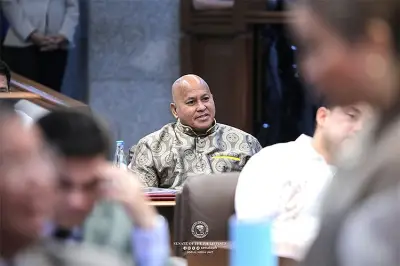
During the heated exchange, Senator Rodante Marcoleta argued that Republic Act 6981, the Witness Protection Act, doesn't explicitly require restitution of disputed funds. However, Justice Secretary Jesus Remulla and Prosecutor General Richard Fadullon maintained that returning unlawfully obtained government money represents both a moral duty and legal obligation.
The debate intensified when Senator Erwin Tulfo posed the central question that resonated with many Filipinos watching the proceedings: Is it unreasonable to expect someone claiming remorse to return money that was never theirs? Prosecutor General Fadullon's immediate response—"It is definitely not unreasonable"—highlighted the stark contrast in perspectives.

Political Shifts Change Witness Dynamics
Observers noted a significant shift in the Discayas' confidence following changes in Senate leadership. When Senator Marcoleta was removed as Blue Ribbon Committee chair, the family's earlier assurance appeared to evaporate, suggesting their cooperation might have been tied to political calculations rather than genuine remorse.
The case exists within a broader pattern of corruption investigations where several whistleblowers have already named politicians and contractors involved in questionable transactions. The Discayas' sudden reluctance to cooperate after political winds shifted raises questions about their true motivations for seeking witness status.
Broader Implications for Philippine Justice System
This controversy touches on fundamental principles of restorative justice, where returning what was taken serves as the first step toward acknowledging harm done. Educators and ordinary citizens watching the hearings drew parallels between basic values taught in classrooms and the behavior expected from public figures.
The intense defense of witnesses seeking immunity without surrendering ill-gotten gains reinforces public cynicism about justice being negotiable for the connected. As sociologists warn, when people treat legal systems as collections of loopholes rather than reflections of character, the entire concept of justice becomes hollow.
Ultimately, the question transcends legal technicalities: Should someone who benefited from alleged wrongdoing return what wasn't theirs before asking for government protection? For most Filipinos, the answer remains straightforward—restitution isn't punishment but a demonstration of integrity that builds public trust in the witness protection process.