President Bongbong Marcos Jr. inaugurated the P833.37 million Mabini-Cayacay Small Reservoir Irrigation Project (SRIP) in Mabini, Bohol last Monday. The project was touted to provide year-round water supply to over 530 hectares of farmland and benefit at least 717 farmers.
Substandard Work Alleged
Even before the presidential visit, allegations surfaced that the concrete used in the irrigation canals was weak and crumbly. Local residents demonstrated that the concrete could easily be broken by hand. Bohol Governor Aris Aumentado has formally requested the Sangguniang Panlalawigan (Provincial Board) to conduct an investigation in aid of legislation into why the National Irrigation Administration (NIA) project turned out substandard.
If the allegations prove true, this would be another example of possible corruption in the construction of the SRIP project in Cayacay, Mabini. The NIA bears significant responsibility as the implementing agency, and they know the contractor who built the weak canals. Moreover, the NIA must explain how the project passed their inspection.

Similar Past Incident
This incident mirrors a previous flood control project in a town in the third district of Bohol. Before the floods, the dike looked impressive. However, when a strong flood hit, the dike was washed away, revealing its innards. Instead of using reinforced steel bars, the contractor had used bamboo. Because the bamboo rotted, the dike's structure weakened and easily collapsed under the flood's force. Despite the scandal, no one was ever charged for that defective project.
Walang Gutom Kitchen in Cebu
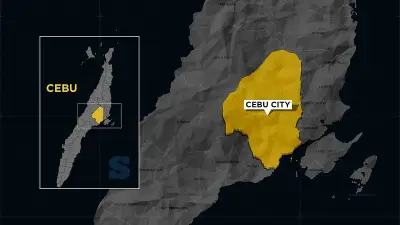
After Bohol, President Marcos proceeded to Cebu to visit the Walang Gutom Kitchen (WGK) program run by the Department of Social Welfare and Development (DSWD). The program offers free breakfast and lunch to the hungry on a first-come, first-served basis.
While the intention is noble, several issues arise. First, it may encourage laziness as people rely on free food rather than seeking livelihood. Second, it is likely a flash-in-the-pan initiative—good at the start but unsustainable due to lack of budget. The program depends on donations of leftover food from hotels and restaurants, which may not always be available. Third, the Department of Agriculture (DA) is not involved in the project, even though food production is its core mandate. If the DA were included, it would be logical to increase its national budget to boost food production.