Military Leaders Stand Firm Against Political Interference in the Philippines
In a critical moment for Philippine democracy, three distinguished uniformed officers have emerged as bastions of constitutional fidelity, demonstrating that true strength lies in service rather than political ambition. Their public statements and professional records reveal a profound commitment to democratic principles that transcends personal relationships or private knowledge.
The Constitutional Guardians: Profiles in Courage
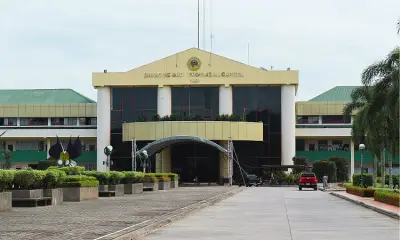
Major General Mike Logico, commanding the Training and Doctrine Command (TRACOM), has consistently articulated the Armed Forces of the Philippines' fundamental role as servants of the Constitution rather than political actors. His leadership emphasizes that military uniforms represent a sacred covenant with the Filipino people, not extensions of individual personalities or partisan interests. Logico's measured tone carries the weight of someone who understands the grave consequences of abandoning institutional oaths.
Colonel Harold Cabunoc, a decorated combat veteran with frontline experience spanning decades, speaks with similar clarity about the military's proper role in democratic society. Having witnessed the destructive potential of disorder firsthand, Cabunoc warns against using military institutions to undermine constitutional processes. His patriotism manifests as lived fidelity rather than performative rhetoric, demonstrating that genuine loyalty cannot be purchased or compromised.

Police General Nicolas Torre, formerly leading the Philippine National Police, exemplified how law enforcement should operate without fear or favor. When required to execute arrests involving powerful figures, Torre demonstrated that courage within established systems remains genuine courage. His actions reinforced that professional duty, not political theater, must guide law enforcement operations.
Historical Context and Contemporary Threats
The significance of these officers' positions becomes clearer when viewed against Philippine history, which bears scars from attempted coups, staged mutinies, and barracks shaken by political ambition. Multiple times in recent decades, military adventurism has threatened to fracture the Republic's democratic foundations.
Today, concerning patterns have reemerged as certain political circles openly court uniformed personnel, encouraging them to abandon constitutional processes in favor of extra-legal "corrections" to the political order. This represents not abstract speculation but documented reality with potentially dangerous consequences for democratic stability.
The Deeper Meaning of Military Service
These officers collectively remind both the nation and their fellow servicemen that military uniforms serve as shields for the people rather than weapons for factional gain. They recognize that contemporary soldiers face battles not only in physical theaters but against temptations to surrender conscience for convenience. True strength manifests not in seizing positions but in maintaining principled stands when pressured to betray institutional oaths.
Drawing from Isaiah's vision of vocation—emphasizing wisdom, understanding, counsel, fortitude, knowledge, and reverence—these officers embody strength that protects rather than intimidates, authority that serves rather than consumes. Their approach represents the guardian's posture rather than the aggressor's stance.
The Foundation of Democratic Resilience
A Republic's survival depends not merely on electoral processes but equally on the character of those entrusted with legitimate force. When soldiers and police officers remain faithful to their constitutional vocations, democracy maintains its structural integrity. When institutional guardians waver, nations face existential threats.
The unambiguous clarity demonstrated by Logico, Cabunoc, and Torre deserves national attention precisely because they avoid political spotlight-seeking while refusing to operate in shadows. Their significance lies not in personal perfection but in professional faithfulness, not in political messaging but in constitutional commitment.

This particular form of grace—grace in camouflage—represents the understanding that power remains borrowed, duty stays sacred, and the Filipino people deserve guardians who will not abandon constitutional principles. Because such officers continue to stand firm, the nation maintains stronger foundations for withstanding political pressures that threaten democratic institutions.