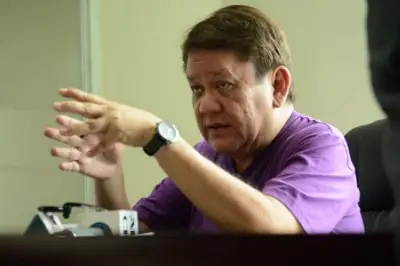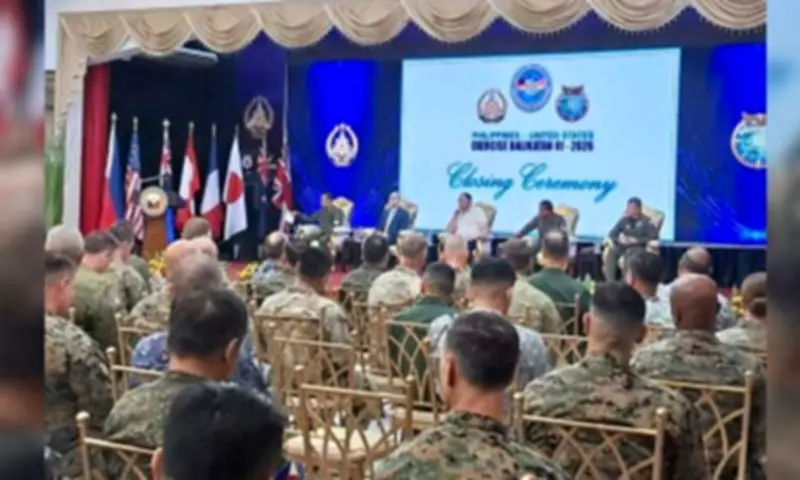
The Balikatan 2026 exercise officially concluded on Friday, May 8, at Camp Aguinaldo in Quezon City, marking the end of nine days of intensive military drills involving 17,000 troops from seven nations. Armed Forces of the Philippines (AFP) Chief of Staff General Romeo Brawner Jr. described the exercise as a direct investment in the country's national defense, strengthening its ability to protect sovereignty and respond to crises.
Brawner Highlights Defense Investment
In his closing remarks, General Brawner emphasized that Balikatan 41 represents a direct investment in national defense for the Filipino people. He stated that it strengthens the nation's capability to protect its sovereignty, defend its territory, and respond effectively to crises. The exercise, which ran from April 20 to May 8, featured participants from the Philippines, United States, Australia, Japan, Canada, France, and New Zealand.
U.S. as Reliable Ally
Brawner also highlighted that the exercise underscores the United States as a reliable ally in defense cooperation, particularly in the Indo-Pacific region. He noted that for the U.S., Balikatan reflects a reliable alliance and meaningful cooperation contributing to regional stability. For other allies and partners, the exercise serves as a model of multilateral cooperation.

The AFP chief reiterated the Philippines' commitment to building capability, reinforcing trust, and affirming a shared commitment to peace, security, and a rules-based international order. This year's drills were conducted across air, land, maritime, cyberspace, electromagnetic spectrum, and information domains, demonstrating integrated forces capable of operating with speed, coordination, and precision.
Deterrence as Primary Goal
U.S. Indo-Pacific Command (USINDOPACOM) Chief Admiral Samuel Paparo noted that while Balikatan has had watershed moments, the primary goal remains enhancing the deterrence capabilities of participating forces. He highlighted the 75th anniversary of the U.S.-Philippine Mutual Defense Treaty and expressed satisfaction that five additional nations joined the exercises this year.
Admiral Paparo described Balikatan 2026 as a strategic evolution from a bilateral exercise to a full-scale multinational mission rehearsal for the defense of the Republic of the Philippines.
Acquisition of Missile Systems
General Brawner also announced that the AFP is looking to acquire more missile weaponry similar to those used by allies during the drills. He cited modern warfare examples, such as the conflicts in Ukraine and the Middle East, where missile systems and drones are heavily utilized. The AFP aims to develop its own capabilities to defend the archipelago independently.
Among the missile systems showcased during Balikatan were the U.S. Tomahawk missile system and the Japanese Type 88 anti-ship missile. Brawner emphasized the need for integrated air and missile defense to protect the country from external attacks.