PDEA and Bureau of Customs Formalize Enhanced Partnership to Combat Drug Smuggling
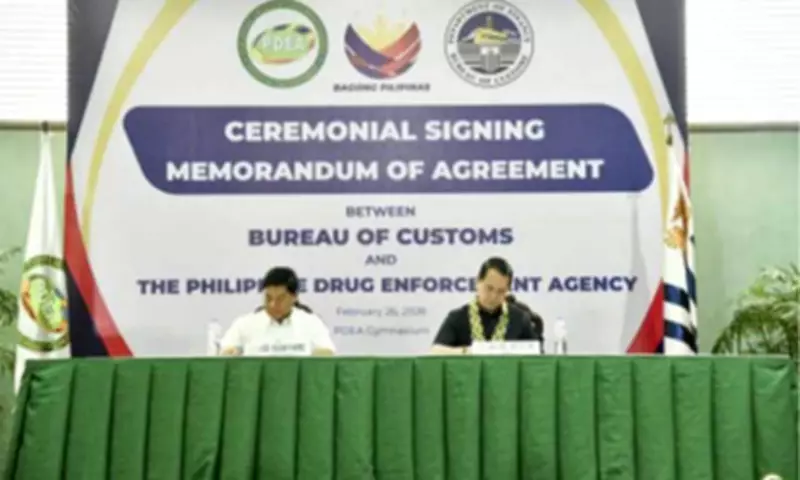
The Philippine Drug Enforcement Agency (PDEA) and the Bureau of Customs (BOC) have officially renewed and strengthened their collaborative efforts to prevent the entry of illegal drugs and controlled precursors and essential chemicals (CPECs) into the Philippines. This strategic alliance was formalized through a memorandum of agreement (MOA) signed on Thursday, February 26, 2026, in Quezon City.
Key Signatories and Operational Coordination
The agreement was signed by PDEA Director General Undersecretary Isagani Nerez and BOC Commissioner Ariel Nepomuceno, marking a significant step in inter-agency cooperation. Under the MOA, both agencies will enhance operational coordination through advanced information-sharing mechanisms, integrated systems, and joint efforts targeting the smuggling, importation, transportation, and transshipment of dangerous drugs and CPECs.
Isagani Nerez emphasized the importance of this partnership, stating, "This agreement sends a clear message to drug syndicates: our ports are not safe havens for drug trafficking. By combining PDEA’s expertise with BOC’s border control capabilities, we are determined to intercept illegal drugs before they reach our communities."

Establishment of Drug Interdiction Task Group
A central feature of this renewed partnership is the establishment of a Drug Interdiction Task Group, designed to foster closer collaboration between PDEA and BOC. This task group will oversee:
- Intelligence exchange between the two agencies
- Joint investigation of suspected drug smuggling activities
- Sharing of best practices and operational expertise
Digital Innovation and Border Security
The MOA also highlights digital innovation as a cornerstone of enhanced border security. Both agencies are committed to implementing integrated databases, pre-shipment inspection systems, and modernized scanning facilities to improve detection and interception capabilities.
This comprehensive approach aims to create a more robust defense against drug trafficking networks attempting to exploit Philippine ports. The collaboration represents a proactive measure to safeguard communities from the harmful effects of illegal substances.