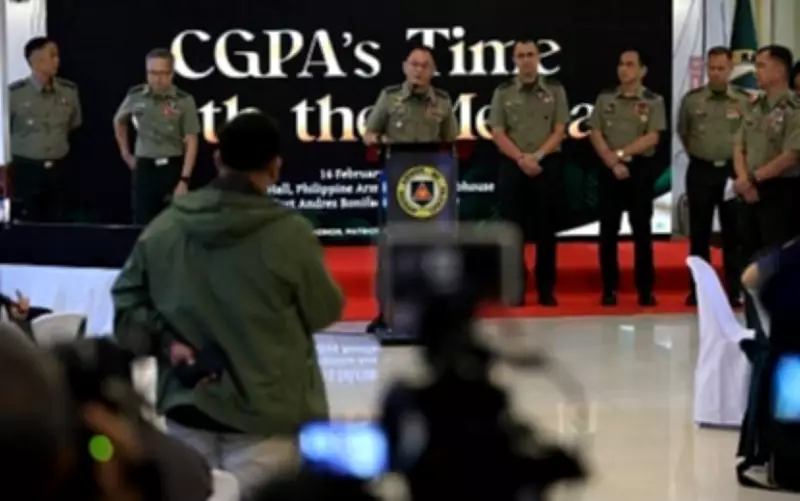
In a significant development for regional security cooperation, Philippine Army (PA) chief Lt. Gen. Antonio Nafarrete announced groundbreaking plans for the upcoming Salaknib military exercises during a press conference at the Philippine Army Officers' Clubhouse in Fort Bonifacio, Taguig City. The briefing, held on Monday, February 16, 2026, served as the opening event for the Army's month-long 129th founding anniversary celebrations, highlighting both historical legacy and future strategic initiatives.
Historic Trilateral Participation
Lt. Gen. Nafarrete confirmed that approximately 5,000 soldiers from the Philippines, United States, and Japan are expected to participate in the first iteration of the Salaknib exercises, tentatively scheduled for April 2026. This marks a historic expansion of the traditionally bilateral drills, as it will be the first time troops from the Japan Ground Self-Defense Force (JGSDF) join the exercises since the Reciprocal Access Agreement between the Philippines and Japan entered into force on September 11, 2025.
Exercise Structure and Objectives
The Salaknib exercises, whose name means "shield" in Ilocano, will primarily focus on several key operational areas according to the PA chief. These include infantry training, joint combined arms operations, humanitarian assistance and disaster relief (HADR) programs, and various capacity-building initiatives. Nafarrete emphasized that the fundamental objective of these drills is to ensure seamless interoperability among all participating forces, enhancing collective readiness for both security challenges and natural disasters.

"Salaknib is basically a US and Philippine bilateral exercise, but for the coming iteration, approximately 300 troops from the JGSDF will participate in various training activities. They will join us in these important preparations," Nafarrete stated during the press briefing.
Emphasis on Disaster Response Capabilities
The Philippine Army chief highlighted the particular importance of HADR components in the exercises, noting the Philippines' vulnerability to typhoons and other natural calamities. "Because they know that we are always being visited by typhoons and they are very willing to provide capabilities in humanitarian assistance and disaster relief. We need more training exercises specifically focused on HADR operations," Nafarrete explained, underscoring the practical benefits of the trilateral cooperation.
Exercise Timeline and Locations
The military exercises will follow a structured timeline, with the first Salaknib iteration planned for April 2026. A second iteration is slated for June 2026, occurring shortly after the annual Balikatan exercises scheduled for April to May. Regarding potential venues, Nafarrete indicated that Northern Luzon locations are being considered, with Fort Magsaysay in Nueva Ecija specifically mentioned as a possible site for the training activities.
This announcement represents a significant step in strengthening defense partnerships in the Asia-Pacific region, combining traditional security cooperation with vital disaster response preparedness. The inclusion of Japanese forces under the new Reciprocal Access Agreement framework demonstrates evolving security architectures and shared commitments to regional stability and humanitarian assistance.