Published on: January 28, 2026, 1:36 pm
Philippine Army Emphasizes Intelligence Role in Monitoring Security Threats
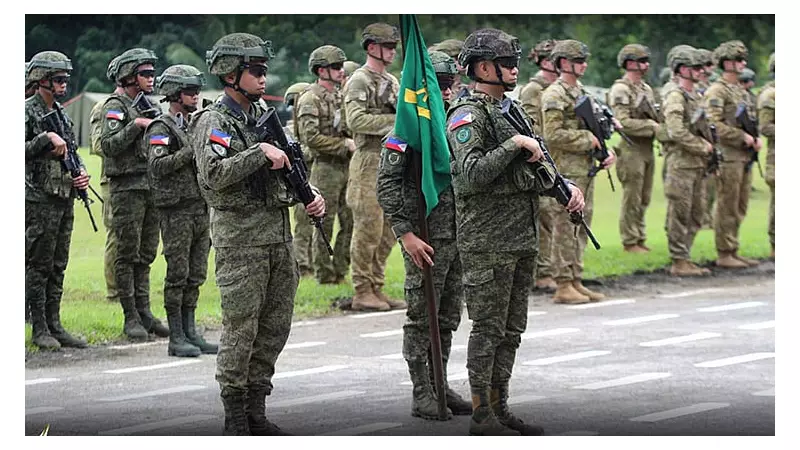
The Philippine Army is actively utilizing intelligence reports to monitor security threats and illegal activities involving foreign individuals, as part of its comprehensive mandate under peace, law enforcement, and development support operations, a senior military official has confirmed.
Intelligence as a Key Component of Military Operations
Major Ruben Gadut, chief of the Division Public Affairs Office of the Army’s 10th Infantry Division (10ID), highlighted that intelligence reporting serves as a fundamental element in the military’s responsibilities, particularly in identifying activities that could potentially disrupt peace and security.

"Intelligence is part of our mandate. We monitor and generate intelligence reports that we relay to the proper law enforcement agencies," Gadut stated during the Davao Peace and Security Press Corps on January 28, 2026.
He elaborated that these military intelligence operations are conducted in close coordination with other government security and law enforcement agencies, especially in scenarios where the collected information might lead to the arrest or prosecution of criminal or terrorist suspects.
Enhanced Coordination with National Police
The Philippine National Police (PNP) has recently underscored the importance of heightened collaboration with the Armed Forces of the Philippines (AFP) in Mindanao to pre-empt terrorism-related recruitment, training, and other activities that could jeopardize peace and order.
Gadut emphasized that individuals, including foreign nationals suspected of engaging in illegal activities, are subject to continuous monitoring, with these efforts being carried out in full coordination with civilian authorities.
Addressing Disinformation and National Security Concerns
While clarifying that concerns related to the West Philippine Sea and foreign propaganda primarily fall under the jurisdiction of national-level agencies, Gadut added that the Army remains vigilant in tracking disinformation narratives that could undermine national security.
"These disinformation narratives are not new. We see them on social media and online platforms, and this is also part of our monitoring," he explained.
Intelligence Reports as Inputs for Law Enforcement
According to Gadut, intelligence reports generated by the Army can serve as critical inputs for law enforcement actions, particularly in cases involving material support to terrorist organizations under the Anti-Terrorism Act of 2020.
He noted that while the military is not the primary agency responsible for filing cases, intelligence findings and gathered evidence may be turned over to appropriate authorities for further legal proceedings.
"In the filing of charges, we are not the primary agency, but evidence sometimes originates from our intelligence reports," Gadut said.
Support Functions and Primary Responsibilities
Beyond intelligence reporting, Gadut mentioned that the Army also provides assistance through logistics and training when requested, aiming to strengthen inter-agency coordination during joint peace and security operations.
He stressed that these support functions remain secondary to the Army’s core responsibility of maintaining peace and security within its designated area of operations.
Gadut further emphasized that the Army’s involvement is strictly limited to security-related concerns, with political issues and policy debates falling outside its jurisdiction.
"Our focus is peace and security in our area. Other political issues are not within our mandate," he concluded.