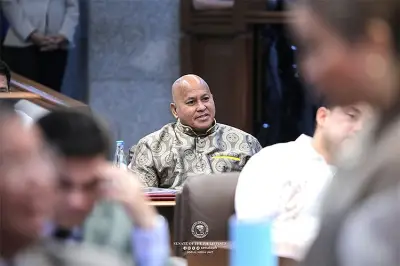
A lawmaker in Cebu City has filed a bill seeking stricter regulations against drunk and drugged driving following a series of fatal road accidents. House Deputy Majority Leader and Cebu City South District Rep. Eduardo “Edu” Rama Jr. introduced House Bill 8939 on April 22 to amend Republic Act 10586, or the Anti-Drunk and Drugged Driving Act of 2013, citing a growing public health crisis related to road safety.
Background of the Bill
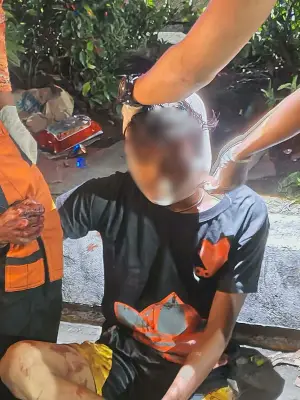
The proposed measure comes after several high-profile incidents in the city, including the hit-and-run death of 23-year-old entrepreneur Kingston Ralph Cheng in Barangay Banilad. Authorities have also noted an increase in late-night and early morning crashes in busy areas such as the South Road Properties, including multiple collisions during the New Year period and a fatal Valentine’s Day accident that killed two senior citizens.
“Road safety in the Philippines has become a public health crisis that demands stronger, more responsive laws,” Rama said.

Stricter Alcohol Limits
Under the bill, blood alcohol concentration limits would be tightened. A zero-tolerance policy is proposed for novice and professional drivers, as well as operators of public utility vehicles and motorcycles. Private vehicle drivers would be limited to 0.02 percent alcohol content.
The measure also mandates chemical testing within two hours for drivers involved in accidents resulting in injury or death. Law enforcement officers who fail to facilitate such testing may face administrative sanctions. Drivers who refuse testing could be presumed to be under the influence, although the presumption remains disputable. Police would also be authorized to require breath samples from motorists when there is probable cause of intoxication or drug use.
Heavier Penalties
Among the bill’s toughest provisions is the imposition of reclusion perpetua and fines ranging from P700,000 to P1 million for driving under the influence-related homicides committed in vulnerable zones. These include school areas, hospitals, public markets, residential communities, and other places with high pedestrian activity but limited protective infrastructure.
The proposal also allows the use of secondary evidence, such as witness testimony, video footage, and behavioral indicators, to establish violations when primary chemical tests are unavailable, refused, or inadmissible. All violators would be required to undergo an Impaired Driver Intervention Program, with noncompliance resulting in permanent revocation of a driver’s license.
Support from Academe
The bill adopts a Vision Zero approach to road safety, recognizing that Philippine road systems often lack pedestrian safeguards such as sidewalks, overpasses, and bike lanes, increasing the risks posed by impaired drivers. Rama said the measure was developed in collaboration with the University of San Carlos School of Law and Governance, whose students and faculty submitted proposed amendments to strengthen the existing law.
Among those acknowledged were USC vice president for administration Joan Largo and College of Law dean Jose Glenn Capanas, along with faculty members and students from the Criminal Justice System class. The lawmaker said the partnership highlights the role of academic institutions in shaping policy responses to urgent national issues.
Rama said the proposed amendments aim to curb reckless driving and reduce road-related deaths, as calls grow for stronger enforcement and updated legislation more than a decade after the original law was enacted.