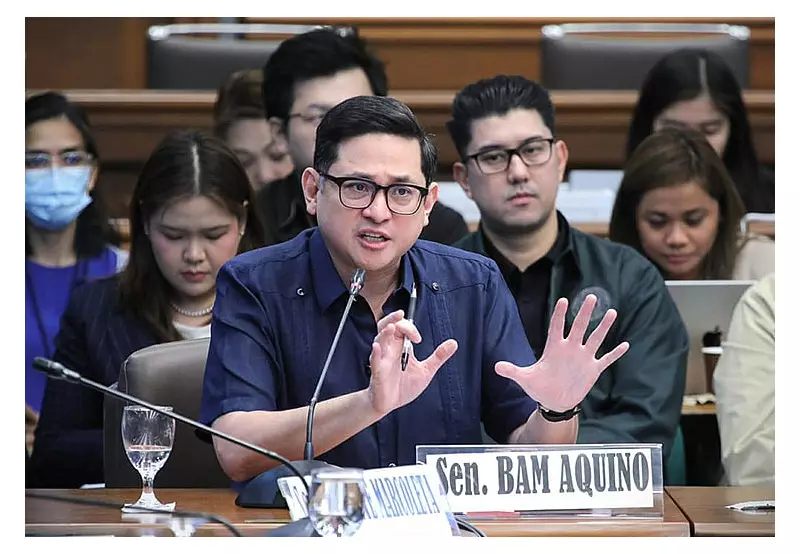
In a significant move to restore public trust in the political system, Senator Paolo "Bam" Aquino IV has introduced a groundbreaking piece of legislation aimed at overhauling the country's party-list representation. The proposed Party-List Reform Act, designated as Senate Bill 1559, was filed with the intent of cleansing Congress and guaranteeing that the voices of marginalized sectors are authentically heard.
Addressing a Broken System
Senator Aquino stated that the bill is a direct response to widespread public frustration with a party-list mechanism that many perceive as flawed and manipulated. He pointed to recent controversies, including the flood control fund issue, as symptoms of a deeper problem. "The outrage is high," Aquino emphasized. "But to really push for systemic changes, we must act now."
The urgency for reform is underscored by data from the election watchdog Kontra Daya. Their analysis of the last elections revealed that a staggering 86 out of 156 party-list groups had connections to powerful political families or corporate interests. This finding highlights how the system originally designed for underrepresented sectors has been co-opted. "They want to see systemic change. They want to see changes that will last," Aquino said, linking the demand for integrity in governance to the need for reliability in public infrastructure.

Key Provisions of the Reform Act
The Party-List Reform Act introduces several robust safeguards designed to create a more resilient and truthful democratic process. A central feature mandates the Commission on Elections (Comelec) to hold public evidentiary hearings. These hearings will scrutinize party-list organizations to verify they legitimately represent the marginalized sectors they claim to serve.
To prevent nepotism and conflicts of interest, the bill establishes strict eligibility criteria for nominees:
- It bars individuals who are related within the third degree of kinship to any sitting elected official.
- It prohibits government contractors, as well as officers of companies involved in public projects, from becoming nominees. This measure directly targets the corruption often associated with large-scale infrastructure projects.
Furthermore, SB 1559 seeks to improve the electoral timeline by extending crucial deadlines. The registration period for party-list groups would be lengthened from 90 to 120 days before elections. Similarly, the release of the certified list of eligible organizations would be moved from 60 to 90 days prior to the polls, allowing for more thorough public scrutiny.
A Call for Vigilance and Action
Senator Aquino concluded with a rallying cry for both citizens and fellow lawmakers. He urged them to seize this critical moment for reform. "At the moment when the nation needs you, do not back down. Stand up, give your best, and offer genuine and real solutions for our people," he stated.
The filing of Senate Bill 1559 marks a pivotal attempt to return the party-list system to its foundational purpose: giving a powerful voice to ordinary Filipinos and ensuring their concerns are at the heart of legislative action.