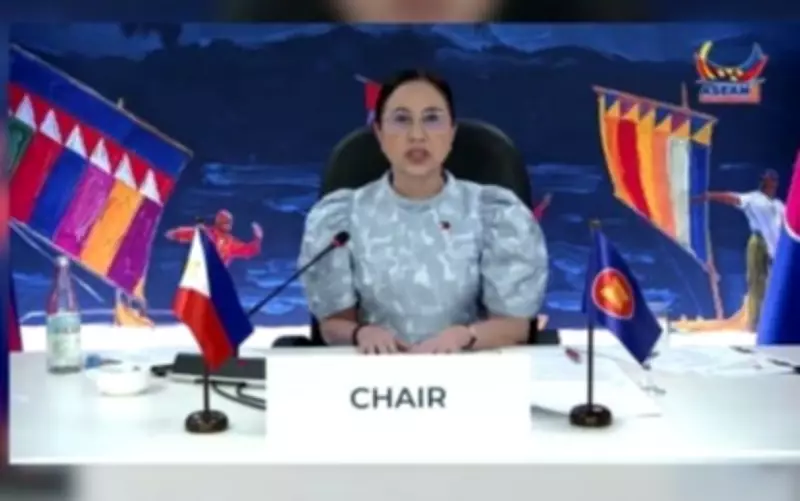
Economic ministers from Southeast Asian nations have unveiled proposed measures to strengthen regional trade, supply chain resilience, and coordinated response to external shocks, as the Middle East conflict continues to impact global markets.
ASEAN Economic Community Council Meeting
The Philippines, represented by Trade Secretary Ma. Cristina Roque, convened the ASEAN Economic Community Council on Thursday to discuss the economic implications of the ongoing Middle East crisis. During a virtual briefing, Roque said AEC ministers met to discuss coordinated regional responses to the impact of the conflict, including measures to strengthen food and energy security.
“We strongly reaffirmed the critical importance of maintaining stable, secure, sustainable, and resilient global supply chains and maritime trade routes, particularly for essential goods and services,” a joint statement released on Friday read.

Key Proposed Measures
The ministers said their respective countries will “strengthen intra-ASEAN trade and supply chain connectivity” through improved logistics coordination, timely information sharing, and continuous consultations. They also agreed to avoid introducing unnecessary non-tariff measures during crises, while keeping trade infrastructure such as land borders, airports, and seaports open “where possible.”
The ministers also backed the swift ratification and timely entry into force within 2026 of the Second Protocol to Amend the ASEAN Trade in Goods Agreement, which upgrades the original agreement to improve trade facilitation, dispute settlement, and transparency within the region.
Addressing Challenges from Middle East Crisis
The ministers pointed out that the escalating impacts of the Middle East crisis on global energy markets, food security, and transport are “increasingly affecting” businesses across Southeast Asia, particularly micro, small, and medium enterprises. They noted that it “may be necessary” for ASEAN member states to implement emergency measures to address these challenges. However, these measures should be “targeted, proportionate, transparent, temporary, and should not create unnecessary barriers to trade and are consistent with World Trade Organization and ASEAN rules.”
Submission to ASEAN Leaders
The ministers will submit the meeting outcome and key recommendations on regional preparedness to ASEAN leaders at the 48th ASEAN Summit in Cebu on May 8.
Summit Preparations
Meanwhile, the ASEAN National Organizing Council (NOC) on Friday confirmed that all is set for the summit proper. ASEAN NOC Director-General Ma. Hellen De La Vega and Presidential Communications Office (PCO) Acting Secretary Dave Gomez will hold an initial press conference and provide an overview of the summit at the formal opening of the International Media Center (IMC) on May 5. The IMC is expecting an estimated 800 to 1,000 local and international media personnel to cover the high-level meetings.