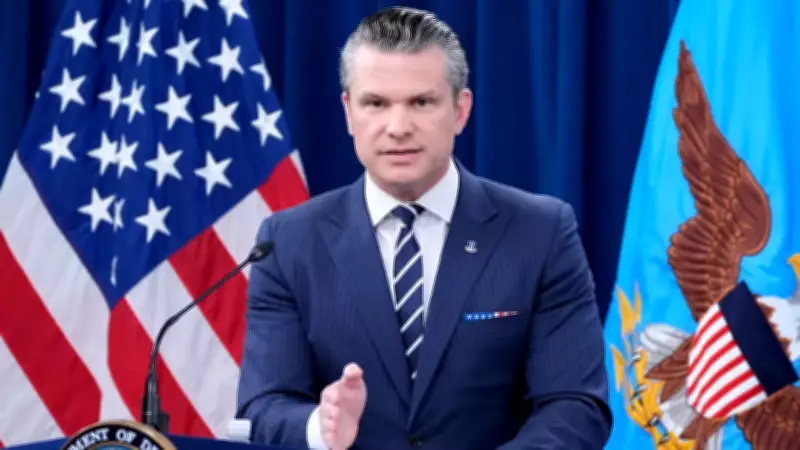
US Defense Secretary Hegseth Defends Close Ties with Israel Amid Iran Airstrikes
US Defense Secretary Pete Hegseth has publicly defended the close military relationship between the United States and Israel, particularly in the context of recent airstrikes targeting Iran. This statement comes in response to growing criticism from some Americans who question whether Israel is exploiting the US alliance to advance its own agenda against Iran.
Shared Objectives in Preventing Nuclear Proliferation
According to Hegseth, the US and Israel maintain a strong and collaborative partnership, united by a common objective: to prevent Iran from developing nuclear weapons. He emphasized that while both nations have their own specific strategic goals, this shared aim has been a driving force behind their coordinated military actions, including the recent airstrikes.
Hegseth asserted that the relationship is built on mutual interests and a joint commitment to regional security, rather than one-sided exploitation. He clarified that the US retains ultimate decision-making authority over the duration and scope of military engagements, including the ongoing conflict with Iran.

Addressing Domestic Criticism and Strategic Autonomy
The Defense Secretary's remarks were a direct reaction to concerns raised by some American citizens and analysts. These critics have argued that Israel might be leveraging US support to pursue its own geopolitical objectives in the Middle East, potentially drawing the US into conflicts that do not align with its national interests.
Hegseth countered these allegations by highlighting the independent yet aligned nature of US and Israeli strategies. He explained that while the two countries work closely together, each maintains its own distinct operational objectives and decision-making processes. This, he suggested, ensures that the partnership remains balanced and effective in addressing shared threats.
US Control Over Military Engagements
In his defense of the alliance, Hegseth underscored that the United States holds the final say in determining the course of military actions against Iran. He stated that the US government carefully evaluates all operations and retains control over when and how the conflict might conclude, ensuring that American interests are prioritized.
This reassurance aims to alleviate fears that the US is being dragged into a prolonged or unnecessary war by its ally. By affirming US leadership in the decision-making process, Hegseth sought to reinforce confidence in the strategic management of the Iran situation.
The ongoing dialogue between the US and Israel continues to shape their collaborative efforts in the region, with both nations navigating complex geopolitical dynamics while maintaining their close defense ties.